

The clinical information regarding Relieve Bone Pain from Prolonged Sitting: Causes and Solutions in this article has been rigorously verified against the latest guidelines from the American Academy of Orthopaedic Surgeons AAOS and primary research from databases like PubMed. This piece was reviewed for accuracy and patient-centric clarity and was last updated in October 2023.
Introduction
introductionA persistent, deep ache in your lower back or tailbone after hours at a desk is more than just an annoyance. It is a significant health concern that can erode your focus, productivity, and overall quality of life. Millions of people who work in sedentary jobs experience this specific type of discomfort, often feeling helpless as the pain worsens. This article presents a clear path forward, outlining the underlying causes of bone pain from prolonged sitting and detailing effective, evidence based solutions ranging from simple lifestyle adjustments to advanced medical interventions.
Why Does My Tailbone or Lower Back Hurt After Sitting?
why-does-my-tailbone-or-lower-back-hurt-after-sitting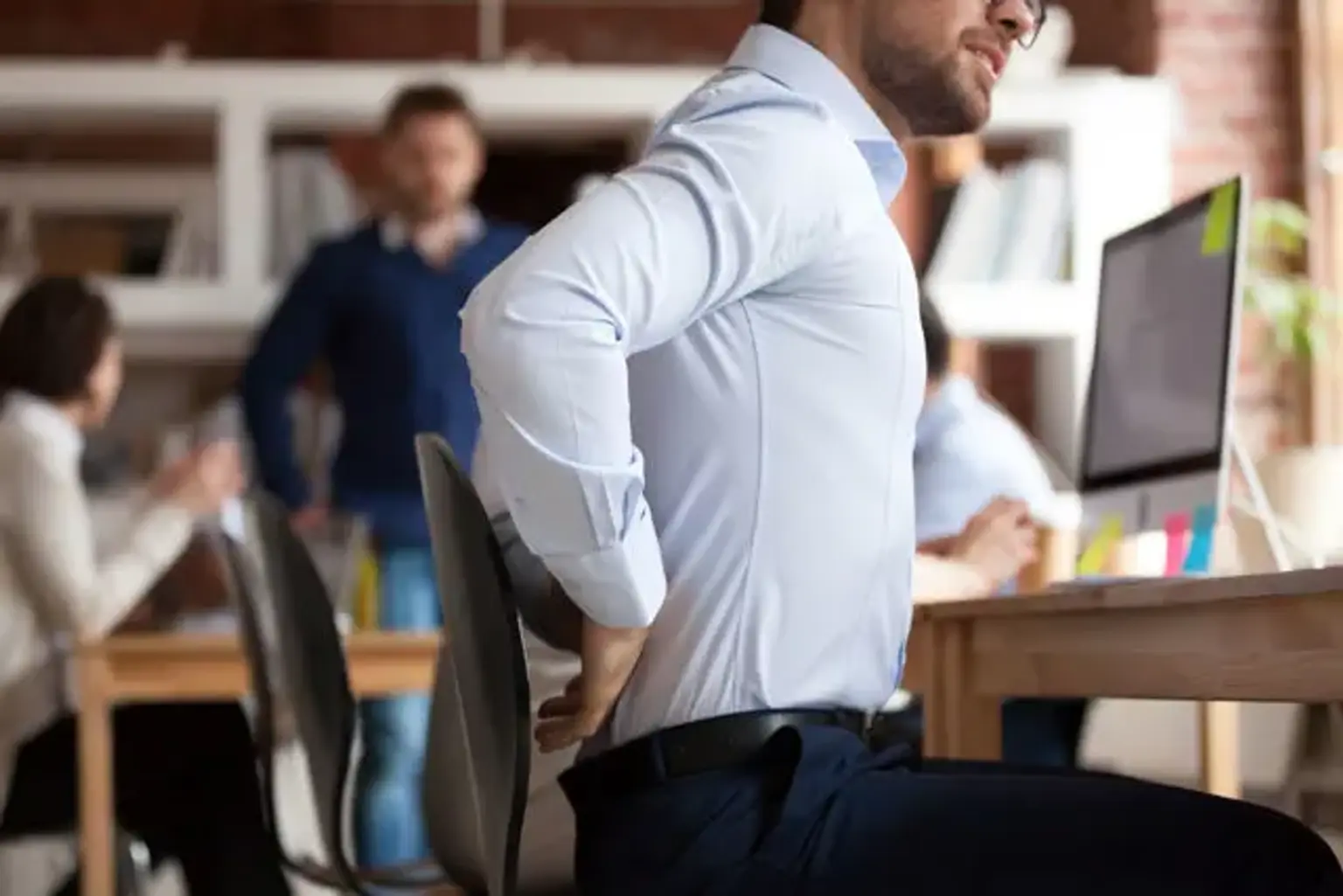
The pain you feel originates from sustained pressure on the spine and surrounding structures. When you sit for long periods, especially with poor posture, you place immense stress on your lumbar spine, tailbone or coccyx, and the sacroiliac joints.
The primary causes of this pain include:
Coccydynia: This is a condition characterized by pain and inflammation in or around the tailbone. Sitting for hours on hard surfaces or in a slouched position directly compresses the coccyx, leading to significant discomfort that is sharpest when you stand up.
Lumbar Disc Pressure: Sitting increases the pressure on the intervertebral discs in your lower back by a significant amount compared to standing. Over time, this can cause the discs to bulge or even herniate, pressing on nearby nerves and causing deep aching pain or sharp, radiating pain known as sciatica.
Muscle Strain and Fatigue: Maintaining a seated posture requires continuous effort from your core, back, and hip muscles. Poor ergonomics force these muscles into unnatural positions, leading to chronic strain, stiffness, and pain.
Poor Posture: Slouching forward or leaning to one side creates an imbalance in your spinal column. This unevenly distributes weight, overloads certain vertebrae and joints, and ultimately results in localized bone and joint pain.
Left unaddressed, chronic pain from sitting can lead to decreased mobility, nerve damage, and a significant decline in daily function.
What is the Best Way to Sit to Avoid Hip and Back Pain?
what-is-the-best-way-to-sit-to-avoid-hip-and-back-painThe best way to sit involves creating a neutral spine position through proper ergonomics and regular movement. This actively counteracts the forces that cause pain.
Start by optimizing your workspace. Your chair should support the natural curve of your lower back. Your feet should be flat on the floor with your knees at a ninety degree angle, level with or slightly lower than your hips. Your computer monitor should be at eye level to prevent you from hunching your neck and shoulders forward.
Beyond setup, active sitting is crucial. Avoid staying in one static position for too long. Shift your weight, stand up to stretch, and walk around for a few minutes at least once every hour. Using a supportive cushion, particularly a coccyx or donut pillow, can dramatically reduce direct pressure on your tailbone and provide immediate relief for those with coccydynia.
Can Stretching Relieve Lower Back Pain from Sitting?
can-stretching-relieve-lower-back-pain-from-sittingYes, a targeted stretching routine is a highly effective way to relieve lower back pain caused by sitting. Stretches work by alleviating muscle tightness, improving flexibility in the hips and hamstrings, and increasing blood flow to the affected areas.
Incorporate these simple yet powerful stretches into your daily routine:
Knee to Chest Stretch: Lie on your back, knees bent, and feet flat on the floor. Gently pull one knee towards your chest, holding for 20 to 30 seconds. Repeat on the other side. This stretches the lower back and gluteal muscles.
Cat Cow Stretch: Start on your hands and knees. Inhale as you drop your belly and look up, creating the cow pose. Exhale as you round your spine upwards, tucking your chin to your chest for the cat pose. This movement improves spinal mobility.
Piriformis Stretch: While sitting or lying down, cross one leg over the other so your ankle rests on the opposite knee. Gently lean forward or pull the supporting leg toward you until you feel a stretch in your buttock. This targets the piriformis muscle, a common source of sciatic like pain.
What Are Advanced Treatments for Chronic Pain from Sitting?
what-are-advanced-treatments-for-chronic-pain-from-sittingWhen conservative measures like stretching and ergonomic adjustments fail to provide adequate relief, advanced medical and surgical treatments can offer a path to recovery. These interventions target the specific structural or neurological source of the pain.
For severe, persistent cases, options like Extracorporeal shock wave therapy can stimulate healing in inflamed tissues. For more structural issues, minimally invasive procedures are often considered. Minimally invasive spinal fusion surgery can stabilize a painful vertebral segment. For degenerative disc issues, artificial disc replacement maintains motion while removing the painful disc. In cases of vertebral compression fractures, which can be aggravated by sitting, percutaneous vertebroplasty provides rapid pain relief by stabilizing the bone.
Emerging regenerative medicine techniques like Orthopedic Stem Cell Therapy and stem cell based cartilage regeneration are also showing promise. These treatments use the body's own healing mechanisms to repair damaged tissues, offering a potential long term solution for joint and disc degeneration contributing to sitting pain.
How Do I Choose the Right Treatment for My Pain?
how-do-i-choose-the-right-treatment-for-my-pain"The constant ache in my tailbone made every meeting a nightmare. I tried every cushion and stretch I could find. It wasn’t until I got a proper diagnosis and underwent a targeted therapy that I could finally sit through a workday without wincing. It was life changing." – An anonymous patient, United States.
Choosing the right treatment begins with a precise diagnosis from an orthopedic or spinal specialist. A thorough evaluation, often including imaging like an MRI or X ray, is necessary to identify the exact cause of your pain, whether it is muscular strain, disc related, or a condition like coccydynia.
The best treatment plan is highly individualized. Your doctor will consider the severity and duration of your pain, your overall health, your lifestyle, and your treatment goals. For many, a combination of physical therapy and lifestyle changes is sufficient. For others with clear structural damage or nerve compression, a minimally invasive procedure may be the most effective route to lasting relief. A consultation with a specialist at a leading orthopedic center is the critical first step to understanding your options.
Recommended Clinics with Relevant Expertise in South Korea
recommended-clinics-with-relevant-expertise-in-south-koreaWebsite | Clinic Name | Best Known For | Address | Contact |
|---|---|---|---|---|
Seoul Yes Hospital | Specialized Spine & Joint Treatment | Yongin-si, Gyeonggi-do, South Korea | ||
Asan Medical Center | Complex Neuromuscular & Orthopedic Surgery | Seoul, Songpa, South Korea | ||
Bumin Hospital Group | Advanced Joint Replacement & Spine Care | Haeundae, Busan, South Korea | ||
Nanoori Hospital, Gangnam | Minimally Invasive Spine & Joint Surgery | Gangnam, Seoul, South Korea | ||
Himchan Hospital | High Volume Joint Replacement & Orthopedics | Bupyeong, Incheon, South Korea | ||
Nasaret International Hospital | Comprehensive Orthopedics & Rehabilitation | Yeonsu-gu, Incheon, South Korea | ||
Gachon University Gil Medical Center | High Tech Orthopedic & Neurological Treatment | Namdong-gu, Incheon, South Korea | ||
Wooridul Hospital Gangnam | World Renowned Specialized Spine Treatment | Gangnam, Seoul, South Korea |
Recommended Treatment and Procedure Options in South Korea
recommended-treatment-and-procedure-options-in-south-koreaTreatment/Procedure Name | Duration | Hospitalization? | Avg. Cost (USD) in S. Korea | Contact |
|---|---|---|---|---|
Total knee replacement | 1 to 2 hours | Needed, (3 to 5 days) | $19000 to $25000 | |
Artificial disc replacement | 2 to 3 hours | Needed, (2 to 4 days) | $20000 to $28000 | |
Artificial joint replacement | 1 to 3 hours | Needed, (2 to 4 days) | $18000 to $26000 | |
Minimally invasive spinal fusion surgery | 2 to 4 hours | Needed, (2 to 4 days) | $22000 to $30000 | |
Stem cell based cartilage regeneration | 1 hour | Not Needed | $8000 to $15000 | |
Orthopedic Stem Cell Therapy | 1 hour | Not Needed | $7000 to $14000 | |
Complex neuromuscular treatment | 30 to 90 mins | Needed (3 to 7 days) | $10000 to $35000 | |
Spinal endoscopic treatment | 1 to 2 hours | Needed, (1 to 2 days) | $12000 to $18000 | |
High tibial osteotomy | 1 to 2 hours | Needed, (2 to 4 days) | $10000 to $16000 | |
ACL reconstruction | 1 to 2 hours | Needed, (1 to 2 days) | $8000 to $12000 | |
Ankle ligament reconstruction | 1 hour | Not Needed | $6000 to $9000 | |
Arthroscopic surgery | 30 to 90 mins | Not Needed | $5000 to $10000 | |
Microscopic decompression surgery | 1 to 2 hours | Needed, (1 to 2 days) | $11000 to $17000 | |
Percutaneous vertebroplasty | 30 to 60 mins | Not Needed | $7000 to $11000 | |
Hallux valgus correction | 1 hour | Not Needed | $5000 to $8000 | |
Epidural neuroplasty | 20 to 30 mins | Not Needed | $2000 to $4000 | |
Zero gravity spinal decompression | 30 mins | Not Needed | $150 to $300 | |
Extracorporeal shock wave therapy | 15 to 20 mins | Not Needed | $200 to $400 |
What Are Other Common Questions About Treating Sitting Pain?
what-are-other-common-questions-about-treating-sitting-painThis section addresses practical questions people have when considering how to solve chronic pain from sitting.
1. Which solution offers the fastest results?
1.-which-solution-offers-the-fastest-resultsFor immediate but temporary relief, ergonomic adjustments and specialized cushions can work within minutes. For pain from acute inflammation, an epidural injection can provide relief within a few days. For long term resolution of a structural problem like a herniated disc, a surgical procedure like microscopic decompression surgery can provide very rapid relief from nerve pain post-recovery.
2. Can the pain return after treatment?
2.-can-the-pain-return-after-treatmentYes, recurrence is possible if the underlying causes are not addressed. For example, pain may return after physical therapy if a person reverts to poor posture and a sedentary lifestyle. Even after successful surgery, maintaining good spinal hygiene, core strength, and proper ergonomics is essential for preventing future issues.
3. Are these treatments painful?
3.-are-these-treatments-painfulConservative treatments like stretching and physical therapy should be gentle and not cause sharp pain. Medical procedures are performed with anesthesia to ensure comfort. Injections may cause brief discomfort. Post surgical pain is expected but is managed effectively with modern pain control protocols and typically resolves as the body heals.
4. How much time do I need off work for recovery?
4.-how-much-time-do-i-need-off-work-for-recoveryThis depends entirely on the treatment. For non-invasive options, no time off is needed. For minimally invasive procedures like an epidural neuroplasty, you might need one day. For more significant surgeries like artificial disc replacement or spinal fusion, recovery can range from a few weeks to several months before you can return to a sedentary job without restrictions.
5. Will my insurance cover these treatments?
5.-will-my-insurance-cover-these-treatmentsInsurance coverage varies widely. Medically necessary treatments for diagnosed conditions like a herniated disc or severe sciatica are often covered. However, emerging treatments like stem cell therapy or preventative ergonomic equipment may not be. It is vital to check with your insurance provider for specific coverage details.
When Should I Worry About Lower Back Pain From Sitting?
when-should-i-worry-about-lower-back-pain-from-sittingYou should consult a doctor if your pain is severe, persistent for more than a few weeks, or accompanied by any of these red flag symptoms:
Pain that radiates down your leg, especially past the knee
Numbness, tingling, or weakness in your legs or feet
Pain that wakes you up at night
Difficulty controlling your bladder or bowels
Pain that occurs with unexplained weight loss or fever
These can be signs of a more serious underlying condition that requires immediate medical evaluation.
Take the First Step Towards a Pain Free Life Today!
take-the-first-step-towards-a-pain-free-lifeYou do not have to accept chronic pain as a normal part of your life. The world class orthopedic centers in South Korea offer a full spectrum of solutions to diagnose and treat the root cause of your discomfort. By inquiring through CloudHospital, you can receive personalized guidance on your specific condition. The process is seamless and transparent, with a dedicated Care Manager to support you from your initial inquiry all the way through to your post treatment care. And Start Your Confidential Inquiry.