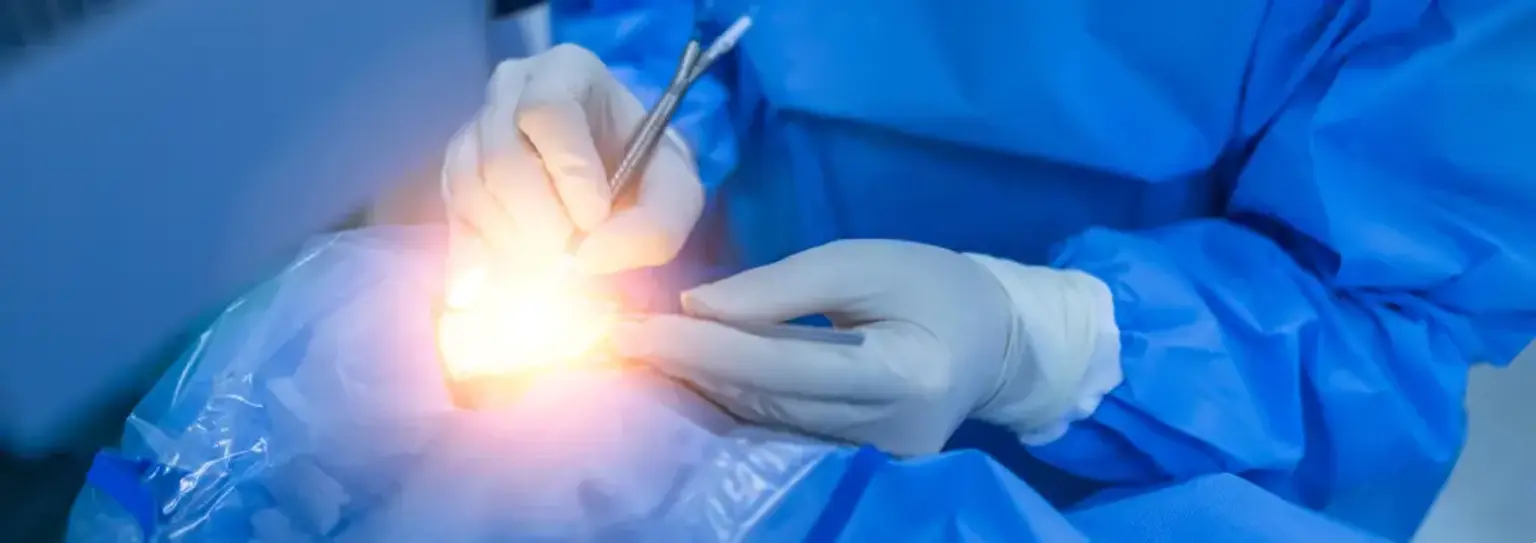

The clinical information regarding Advanced LASEK Procedures in Korean Hospitals in this article has been rigorously verified against the latest guidelines from the Korean Ophthalmological Society and primary research from databases like PubMed. This piece was reviewed for accuracy and patient-centric clarity and was last updated in August 2025.
Introduction
introduction-to-advanced-lasek-proceduresSouth Korea has firmly established itself as a global powerhouse in the field of ophthalmology, particularly in vision correction surgery. The nation's rapid adoption of cutting-edge medical technologies, combined with highly experienced surgeons and a competitive market, has made it a premier destination for patients seeking the most advanced procedures available. This article explores the breakthrough innovations in Laser-Assisted Sub-Epithelial Keratectomy (LASEK) that are setting new standards for safety, precision, and patient outcomes, and what this means for the future of clear vision.
What Makes Advanced LASEK in South Korea Superior to Traditional Methods?
what-makes-advanced-lasek-in-south-korea-superior-to-traditional-methodsAdvanced LASEK in South Korea is superior due to the integration of next-generation laser systems, sophisticated diagnostic mapping, and refined surgical techniques that minimize discomfort and accelerate healing. Unlike traditional LASEK, which involves manually loosening the cornea's outer layer, epithelium with an alcohol solution, advanced methods utilize all-laser or no-touch approaches. These innovations, such as Trans-PRK (Transepithelial Photorefractive Keratectomy), use a single excimer laser to both remove the epithelium and reshape the cornea in one seamless step. This eliminates the chemical and mechanical stress on the eye, reducing the risk of inflammation and promoting a more predictable recovery. Furthermore, Korean clinics pair these techniques with highly customized treatment plans based on wavefront and topography-guided imaging, which maps the eye's unique imperfections with incredible detail. This allows for a more precise correction, not just of common refractive errors like myopia and astigmatism, but also of higher-order aberrations that affect night vision and contrast sensitivity.
How Do New Technologies Like All-Laser LASEK Improve Patient Safety and Recovery?
how-do-new-technologies-like-all-laser-lasek-improve-patient-safety-and-recoveryAll-laser LASEK, often marketed as No-Touch LASEK or StreamLight, significantly improves safety by creating a more stable and predictable procedure. By removing the need for alcohol solutions or manual instruments to separate the epithelial layer, the risk of human error is minimized, and the cornea remains in a more pristine condition. This results in several key benefits:
Reduced Pain and Discomfort: Patients often report less post-operative pain compared to conventional LASEK.
Faster Epithelial Healing: The laser removal is more precise and uniform, which can lead to quicker regeneration of the surface cells, often within 2-4 days.
Lower Risk of Haze: The reduced trauma to the cornea lowers the probability of developing corneal haze, a potential side effect of surface ablation procedures.
Increased Accuracy: The integration with advanced diagnostic platforms like the Schwind Amaris 1050RS ensures that the laser ablation is perfectly centered and aligned, leading to better visual outcomes.
How Has No-Touch LASEK Trans-PRK Revolutionized the Patient Experience?
how-has-no-touch-lasek-(trans-prk)-revolutionized-the-patient-experienceNo-Touch LASEK has revolutionized the patient experience by transforming a procedure that once caused apprehension into a quick, minimally invasive, and psychologically comfortable event. The entire surgery, from start to finish, can be completed in minutes, with the laser portion lasting less than a minute per eye. For the patient, this means no surgical instruments touching the eye's surface, which greatly reduces anxiety. The process is entirely computer-controlled, guided by a precise 3D map of the patient's eye. The recovery, while slightly longer than flap-based procedures like LASIK, is much improved over older LASEK methods. This combination of speed, safety, and reduced physical interaction has made vision correction accessible and appealing to a broader range of patients, especially those with thinner corneas or active lifestyles who were previously not ideal candidates for LASIK.
What Does the Future of Laser Vision Correction Look Like Beyond Current LASEK Techniques?
what-does-the-future-of-laser-vision-correction-look-like-beyond-current-lasek-techniquesThe future of laser vision correction is moving towards even greater personalization and minimally invasive techniques. While current advanced LASEK and SMILE Eye Surgery represent the pinnacle of today's technology, research is focused on lenticule extraction with even smaller incisions and developing smart IOLs, intraocular lenses that can adjust focus electronically. The ultimate goal is to provide perfect vision with almost no surgical intervention or recovery time. Technologies combining artificial intelligence for predictive modeling of surgical outcomes are already being implemented in top Korean clinics, allowing surgeons to forecast visual results with remarkable accuracy. The trend is clear: surgery will become faster, safer, and capable of correcting a wider spectrum of visual impairments than ever before.
"I was nervous about surgery, but the no-touch technique sounded like something from the future. The idea that a laser could fix my vision in under a minute without a blade was incredible. Now, seeing the world with such clarity, I'm just excited for what technology will make possible next." – An anonymous patient, USA.
Recommended Clinics with Relevant Expertise in South Korea
recommended-clinics-with-relevant-expertise-in-south-koreaSouth Korea is home to numerous world-class ophthalmology centers. The following clinics are noted for their advanced technology, experienced specialists, and comprehensive care for international patients.
Visit Website | Clinic Name | Best Known For | Address | Contact |
|---|---|---|---|---|
SNU Eye Clinic | SMILE LASIK, cataract surgery, and being a pioneer in advanced vision correction techniques. | Gangnam-gu, Seoul, South Korea | ||
Gangnam Joeunnun Vision Clinic | SMILE LASIK, presbyopia correction, and operating a joint research center with ZEISS. | Gangnam-gu, Seoul, South Korea | ||
Jryn Eye Clinic | Comprehensive eye care including LASIK, LASEK, and specialized lens surgeries. | Busanjin-gu, Busan, South Korea | ||
Global Ubal Eye Center | Over 20 years of experience in LASIK, LASEK, cataract surgery, and retinal treatments. | Jung-gu, Incheon, South Korea | ||
Cha University Bundang Medical Center | University hospital with a comprehensive ophthalmology department covering all eye diseases. | Bundang-gu, Seongnam-si, South Korea | ||
Chosun University Hospital | Major university hospital providing a wide range of ophthalmic treatments and surgeries. | Dong-gu, Gwangju, South Korea | ||
Kangdong Sacred Heart Hospital | Full-service ophthalmology department treating a wide spectrum of eye diseases, including pediatric cases. | Gangdong-gu, Seoul, South Korea | ||
Samyook Busan Adventist Hospital | Comprehensive eye care services including diagnostics and surgery in the Busan region. | Seo-gu, Busan, South Korea |
Recommended Treatment/Procedure Names with Average Costs in South Korea
recommended-treatmentprocedure-names-with-average-costs-in-south-koreaThe cost of eye procedures in South Korea is highly competitive, often significantly lower than in the US or Europe, without compromising on quality or technology.
Treatment/Procedure Name | Duration | Hospitalization? | Avg Cost Range (USD) in S. Korea | Contact |
|---|---|---|---|---|
LASEK | 10-15 minutes | Not Needed | $1,100 - $2,250 | |
LASIK | 10-15 minutes | Not Needed | $1,600 - $2,500 | |
SMILE Eye Surgery | 10-15 minutes | Not Needed | $2,000 - $3,400 | |
Implantable Collamer Lens (ICL) Surgery | 20-30 minutes | Not Needed | $3,200 - $5,600 | |
Cataract Surgery | 10-20 minutes | Not Needed | $1,100 - $2,300 | |
Premium Cataract Surgery with IOLs | 10-20 minutes | Not Needed | $2,700 - $4,900 | |
Presbyopia Correction | 15-20 minutes | Not Needed | $2,500 - $4,500 | |
Astigmatism Refractive Surgery | 10-15 minutes | Not Needed | $1,500 - $3,000 | |
Dry Eye Treatment (IPL, LipiFlow) | 15-30 minutes | Not Needed | $200 - $500 | |
Glaucoma Treatment | 10-20 mins | Not Needed | $800 - $1,500 | |
Retinal Diseases Treatment | 30-60 minutes | Not Needed | $1,500 - $3,500 | |
Pediatric Eye Care | 30-60 minutes | Not Needed | $1,000 - $1,500 | |
Vitreoretinal Surgery | 1-3 hours | Needed (1 day) | $5,000 - $10,000 | |
Treatment for Keratoconus (CXL) | 30-60 minutes | Not Needed | $1,500 - $2,500 | |
Corneal Transplantation Surgery | 1-2 hours | Needed (1-2 days) | $8,000 - $15,000 | |
Retinal Detachment | 1-2 hours | Needed (1-3 days) | $6,000 - $12,000 |
What Should Patients Know About These Future Technologies? (FAQ)
what-should-patients-know-about-these-future-technologies-(faq)This section addresses the most common practical questions a reader will have about accessing these innovations.
1. Are advanced LASEK procedures in Korea painful?
1.-are-advanced-lasek-procedures-in-korea-painfulThe procedure itself is painless as the eyes are completely numbed with anesthetic drops. Post-operative discomfort is common with any LASEK procedure as the epithelial layer heals, typically described as a foreign body sensation or irritation for 2-3 days. However, advanced all-laser techniques often lead to less discomfort during recovery compared to older methods. Pain medication and protective contact lenses are provided to manage this healing period comfortably.
2. How soon will these advanced LASEK techniques be widely available?
2.-how-soon-will-these-advanced-lasek-techniques-be-widely-availableThese advanced techniques, such as No-Touch Trans-PRK and Wavefront-guided LASEK, are already the standard of care in leading ophthalmology clinics throughout South Korea, particularly in major centers like Seoul. The country's competitive medical landscape ensures that top clinics rapidly adopt and perfect the latest approved technologies.
3. Do these new technologies make treatments more expensive?
3.-do-these-new-technologies-make-treatments-more-expensiveWhile the most advanced lasers represent a significant investment for clinics, the high volume of procedures and market competition in South Korea keep prices remarkably affordable. The cost for advanced LASEK is often comparable to or only slightly more than traditional LASEK, and it remains significantly less expensive than equivalent procedures in the United States, Canada, or Europe.
4. How can I find a clinic that uses these advanced techniques?
4.-how-can-i-find-a-clinic-that-uses-these-advanced-techniquesThe best approach is to look for clinics that specifically advertise the technologies by name, such as Amaris Red 1050RS, Trans-PRK, All-Laser LASEK, or Wavefront-guided treatments. The clinics listed in this article are recognized for utilizing state-of-the-art equipment. Using a medical tourism facilitator can also help connect you directly with pre-vetted centers known for their technological capabilities.
5. What is the typical recovery time for advanced LASEK in Korea?
5.-what-is-the-typical-recovery-time-for-advanced-lasek-in-koreaInitial visual recovery for LASEK takes slightly longer than for LASIK. Most patients can expect blurry vision for the first 2-4 days while the surface epithelium heals. Functional vision sufficient for most daily activities is typically achieved within the first week. Vision continues to sharpen and stabilize over the following weeks, with the best results often seen at the one-to-three-month mark. The 2-Day LASEK concept refers to a refinement of the technique and post-op care designed to make patients comfortable and functional more quickly, but the biological healing timeline remains similar.
Take the First Step Towards Flawless Vision Now!
take-the-first-step-towards-flawless-visionYour journey to a life free from glasses and contact lenses begins with a single step. South Korea's world-leading ophthalmic centers offer a clear path to achieving the vision you've always wanted, using technology that defines the future of eye care. To ensure a seamless and transparent process, visit CloudHospital through the link given below. A dedicated Care Manager can provide end-to-end support, from your initial questions to your post-recovery care. Discover which advanced procedure is right for you. And Start Your Confidential Inquiry for a free, personalized treatment plan and embark on your path to perfect sight.