

The clinical information regarding vitrectomy in this article has been rigorously verified against the latest guidelines from the American Academy of Ophthalmology (AAO) and primary research from databases like PubMed. This piece was reviewed for accuracy and patient-centric clarity and was last updated in October 2023.
Introduction
introductionDiabetic retinopathy, a serious complication of diabetes, affects an estimated one in three people living with the condition, and is a leading cause of vision loss globally. For this and many other complex retinal conditions, a highly specialized procedure known as a vitrectomy can be the key to preserving or restoring sight. This document explains what a vitrectomy is, what conditions it treats, who is an ideal candidate, and what to expect from the procedure and recovery process in South Korea's advanced medical system.
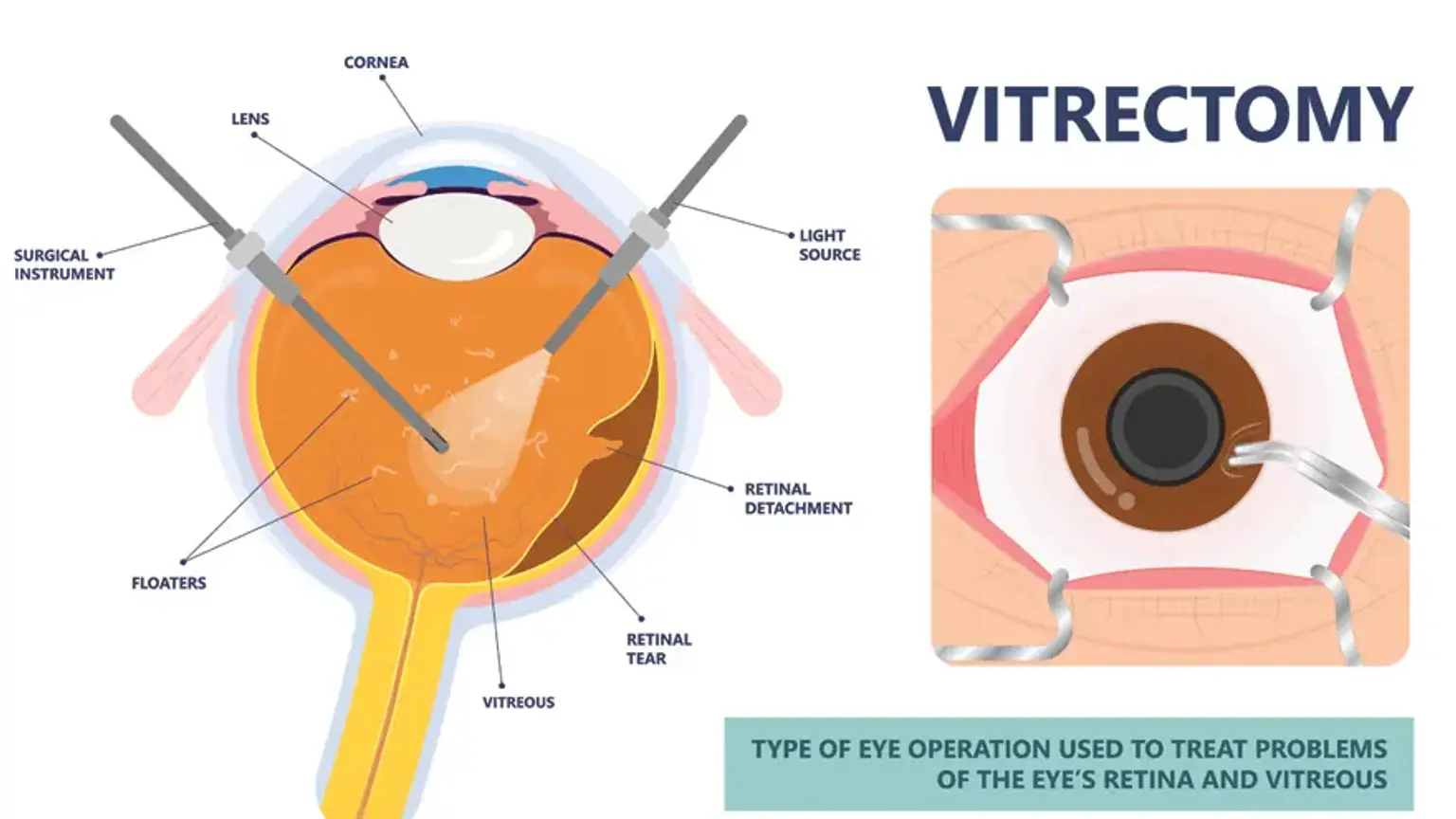
What is a Vitrectomy?
what-is-a-vitrectomyA vitrectomy is a type of advanced microsurgery performed on the eye's vitreous humor, the clear, gel like substance that fills the large, central cavity of the eyeball. The primary goal of the procedure is to remove the vitreous gel to provide a vitreoretinal surgeon with access to the back of the eye, specifically the retina. This allows the surgeon to treat a variety of diseases that damage or affect the retina and impair vision. After the vitreous is removed, it is replaced with a sterile solution, a gas bubble, or silicone oil to help the retina heal and maintain the eye's shape.
What Conditions Does a Vitrectomy Treat?
what-conditions-does-a-vitrectomy-treatA vitrectomy is performed to address problems that cannot be corrected with less invasive methods. It is a critical intervention for a range of serious retinal and vitreous conditions.
Retinal Detachment: This is a medical emergency where the retina pulls away from its normal position. A vitrectomy allows the surgeon to reattach the retina and secure it in place.
Diabetic Retinopathy: In advanced stages, abnormal blood vessels can grow, bleed into the vitreous vitreous hemorrhage, and cause scar tissue that pulls on the retina. Vitrectomy removes the blood clouded vitreous and the scar tissue.
Macular Hole: A small break in the macula, the part of the retina responsible for sharp, central vision. The surgery removes the vitreous pulling on the macula, allowing the hole to close.
Macular Pucker (Epiretinal Membrane): This occurs when scar tissue forms on the macula's surface, causing blurred and distorted central vision. A vitrectomy is used to carefully peel this membrane away.
Vitreous Hemorrhage: Bleeding into the vitreous from injury or conditions like diabetic retinopathy can severely obscure vision. The procedure clears this blood to restore sight.
Severe Eye Infections (Endophthalmitis): A vitrectomy can be used to remove infected tissue from inside the eye.
Complications from Previous Eye Surgery: The procedure can resolve issues like a dislocated intraocular lens (IOL) following cataract surgery.
Patient story: "For months, a thick web of floaters and a dark curtain had been creeping across my vision. After the vitrectomy, the moment the bandage came off, the world was bright again. The clarity was something I thought I'd lost forever." – an anonymous patient, Australia.
Who is an Ideal Candidate for Vitrectomy Surgery?
who-is-an-ideal-candidate-for-vitrectomy-surgeryAn ideal candidate for a vitrectomy is someone whose retinal condition poses a significant threat to their vision and cannot be effectively treated with other methods like laser therapy or injections alone.
A comprehensive ophthalmologic evaluation determines candidacy. Key factors include:
Confirmed Diagnosis: The presence of a condition known to benefit from vitrectomy, such as a macular hole or complex retinal detachment.
Potential for Vision Improvement: The surgeon must determine that the potential benefits of the surgery in preserving or improving vision outweigh the inherent risks.
Overall Health Status: Patients must be healthy enough to undergo surgery, which is typically performed under local or general anesthesia.
Ability to Comply with Post-Operative Care: Recovery often involves specific, strict instructions, such as maintaining a face down position for an extended period, which is crucial for the healing of conditions like macular holes.
The Vitrectomy Procedure: A Step-by-Step Overview
the-vitrectomy-procedure:-a-step-by-step-overviewModern vitrectomy is a highly precise outpatient procedure performed in a sterile operating room. The process, known as pars plana vitrectomy, involves several key steps.
Anesthesia and Preparation: The eye is numbed with local anesthesia, and the patient may receive a sedative to relax. The area around the eye is thoroughly cleaned.
Micro-Incisions: The vitreoretinal surgeon makes three tiny incisions often less than a millimeter wide in the sclera the white part of the eye. These ports are for an infusion line to maintain eye pressure, a fiber optic light source, and the micro surgical instruments.
Vitreous Removal: A specialized instrument called a vitrector is inserted to carefully cut and suction out the vitreous gel.
Addressing the Retinal Problem: With a clear view of the retina, the surgeon performs the necessary treatment. This could involve:
Using a laser to repair retinal tears endophotocoagulation.
Peeling away scar tissue epiretinal membrane.
Removing foreign objects or blood.
Flattening a detached retina.
Vitreous Replacement: The removed vitreous gel is replaced with a tamponade agent. The choice depends on the condition being treated:
Saline Solution: The body naturally replaces this with its own fluid aqueous humor over time.
Gas Bubble (C3F8 or SF6): The gas bubble acts as an internal bandage, pressing the retina into place while it heals. The body absorbs the gas over several weeks.
Silicone Oil: This is used for more complex cases, such as severe retinal detachments. It provides longer term support but typically requires a second surgery for removal months later.
Closing: The small incisions are often self-sealing and may not require stitches.
What are the Risks and Success Rates of Vitrectomy?
what-are-the-risks-and-success-rates-of-vitrectomyThe success of a vitrectomy is highly dependent on the underlying condition being treated. For anatomical success in repairing macular holes, rates are often greater than 90%. For repairing retinal detachments, anatomical success can be achieved in 80-90% of cases with one or more operations.
While vitrectomy is a safe and effective procedure, it carries risks like any surgery. These include:
Cataract Formation: This is the most common complication. Many patients will develop a cataract faster than they otherwise would have and may require cataract surgery within a year or two.
Increased Intraocular Pressure (Glaucoma): A temporary or persistent rise in eye pressure.
Infection (Endophthalmitis): A very rare but serious complication.
Bleeding: Bleeding inside the eye.
Retinal Detachment: There is a small risk that the surgery itself could cause a new retinal tear or detachment.
Recommended Clinics with Relevant Expertise in South Korea
recommended-clinics-with-relevant-expertise-in-south-koreaSouth Korea is recognized for its advanced medical infrastructure and highly skilled ophthalmologists, particularly in complex retinal surgeries. The following clinics and hospitals are notable centers for comprehensive eye care.
Website | Clinic Name | Best Known For | Address | Contact |
|---|---|---|---|---|
Jryn Eye Clinic | Premium cataract surgery, presbyopia correction, and vision correction. | Busanjin-gu, Busan, South Korea | ||
SNU Eye Clinic | University-hospital level care, treatment of complex retinal and vitreous diseases. | Gangnam-gu, Seoul, South Korea | ||
Gangnam Joeunnun Vision Clinic | Vision correction (LASIK/SMILE), premium cataract surgery. | Gangnam-gu, Seoul, South korea | ||
Global Ubal Eye Center | Comprehensive eye care including vision correction and cataract surgery. | Jung-gu, Incheon, South Korea | ||
Cha University Bundang Medical Center | Multidisciplinary care, specialized ophthalmology department for complex cases. | Bundang-gu, Seongnam-si, South Korea | ||
Chosun University Hospital | University-level research and advanced treatment for retinal disorders. | Gwangju, Dong-gu, South Korea | ||
Kangdong Sacred Heart Hospital | Specialized medical centers including advanced ophthalmology services. | Gangdong-gu ,Seoul, South Korea | ||
Samyook Busan Adventist Hospital | Comprehensive medical services with a dedicated eye care department. | Busan, Seo-gu, South Korea |
Recommended Treatment/Procedure Names with Average Costs in South Korea
recommended-treatmentprocedure-names-with-average-costs-in-south-koreaThe cost of ophthalmic procedures can vary based on the complexity of the case, the specific technology used, and the hospital. Below are estimated ranges for relevant treatments in South Korea.
Treatment/Procedure Name | Duration | Hospitalization? | Avg. Cost (USD) in S. Korea | Contact |
|---|---|---|---|---|
Vitrectomy | 1-3 hours | Not Needed | $4,000 - $8,000 | |
Retinal Detachment Surgery | 1-3 hours | Not Needed | $5,000 - $9,000 | |
Cataract Surgery (Standard) | 20-30 mins | Not Needed | $2,000 - $4,500 | |
Premium Cataract Surgery with IOLs | 20-30 mins | Not Needed | $3,500 - $7,000+ | |
LASEK | 15-20 mins | Not Needed | $1,600 - $3,200 | |
Presbyopia Correction (Laser/Lens) | 15-30 mins | Not Needed | $2,500 - $6,000 | |
Implantable Collamer Lens (ICL) | 20-30 mins | Not Needed | $4,000 - $6,500 | |
Vision Correction Surgery (General) | 1 hour | Not Needed | $1,500 - $7,000 | |
Astigmatism Refractive Surgery | 15-20 mins | Not Needed | $1,800 - $3,500 | |
Dry Eye Treatment (e.g., IPL) | 15-30 mins | Not Needed | $200 - $500 | |
Glaucoma Treatment (e.g., SLT) | 10-15 mins | Not Needed | $500 - $1,500 | |
Pediatric Eye Care | 15-20 mins | Not Needed | $200 - $500 | |
Vitreoretinal Surgery | 1-3 hours | Needed(1 day) | $5,000 - $15,000 | |
Treatment for Keratoconus (CXL) | 30-60 mins | Not Needed | $1,500 - $3,000 | |
Corneal Transplantation Surgery | 1-2 hours | Needed | $8,000 - $20,000 |
Your Key Questions About Vitrectomy Answered
your-key-questions-about-vitrectomy-answered1. How long is the recovery time for a vitrectomy?
1.-how-long-is-the-recovery-time-for-a-vitrectomyFull recovery from a vitrectomy can take four to six weeks, though visual recovery continues for several months. The initial phase is the most critical, often requiring specific head positioning and activity restrictions. Your surgeon will provide a detailed timeline based on your specific procedure.
2. Is a vitrectomy procedure painful?
2.-is-a-vitrectomy-procedure-painfulThe vitrectomy procedure itself is not painful due to local or general anesthesia. After surgery, it is normal to experience some discomfort, scratchiness, or a dull ache in the eye, which can be managed effectively with prescribed pain medication and eye drops.
3. What restrictions will I have after a vitrectomy?
3.-what-restrictions-will-i-have-after-a-vitrectomyRestrictions depend on whether a gas bubble was used to repair the retina. If so, you will be required to maintain a specific head position often face-down for up to 90% of the day for one to two weeks. This is crucial for the gas bubble to press against the retina correctly. Heavy lifting, strenuous activity, and rubbing the eye are forbidden for several weeks.
4. When can I fly after a vitrectomy with a gas bubble?
4.-when-can-i-fly-after-a-vitrectomy-with-a-gas-bubbleYou cannot fly in an airplane until the gas bubble is completely gone from your eye. The change in cabin pressure can cause a dangerous increase in eye pressure, leading to severe pain and vision loss. Your surgeon will advise when it is safe to fly, which can be anywhere from two to eight weeks or more.
5. Will my vision be blurry after surgery?
5.-will-my-vision-be-blurry-after-surgeryYes, your vision will be very blurry immediately after the surgery. If a gas bubble was used, you may only be able to perceive light and motion, as if looking through water. As the bubble is absorbed and replaced by the eye's natural fluid, vision will gradually clear over several weeks to months.
6. Why choose South Korea for vitrectomy surgery?
6.-why-choose-south-korea-for-vitrectomy-surgeryPatients choose South Korea for its combination of world class vitreoretinal surgeons, state of the art diagnostic and surgical technology (e.g., small-gauge vitrectomy systems), and efficient, high-quality hospital systems. The expertise in complex retinal cases, combined with competitive costs compared to many Western countries, makes it a leading destination for advanced ophthalmic care.
Restore Your Vision: Explore Vitrectomy Options in Korea Now!
restore-your-vision:-explore-vitrectomy-options-in-koreaNavigating a serious retinal condition requires clear information and access to expert care. If you are considering a vitrectomy, taking the next step to get a professional medical opinion is paramount. By inquiring through CloudHospital a trusted medical platform, you gain access to a seamless, transparent process designed for international patients. A dedicated Care Manager provides end-to-end support, from initial consultations with top Korean specialists to coordinating your travel and post-recovery care. And Start Your Confidential Inquiry to receive a personalized treatment plan and connect with leading vitreoretinal surgeons in South Korea.