

The clinical information regarding Korea’s Role in Advancing Retinal Imaging Technologies in this article has been rigorously verified against the latest research from the Korean Ophthalmological Society (KOS) and primary research from databases like PubMed. This piece was reviewed for accuracy and patient-centric clarity and was last updated in October 2023.
Introduction
introductionSouth Korea has firmly established itself as a global powerhouse in technological innovation. This reputation extends deep into the field of Ophthalmology, where the nation's investment in research, development, and clinical application is revolutionizing how doctors see and treat the human eye. Specifically in retinal imaging, Korean engineers and clinicians are developing and deploying next-generation technologies that provide unprecedented views of the eye's delicate posterior structures. These breakthroughs are setting new standards for the early detection and management of sight-threatening conditions, offering new hope to patients worldwide.
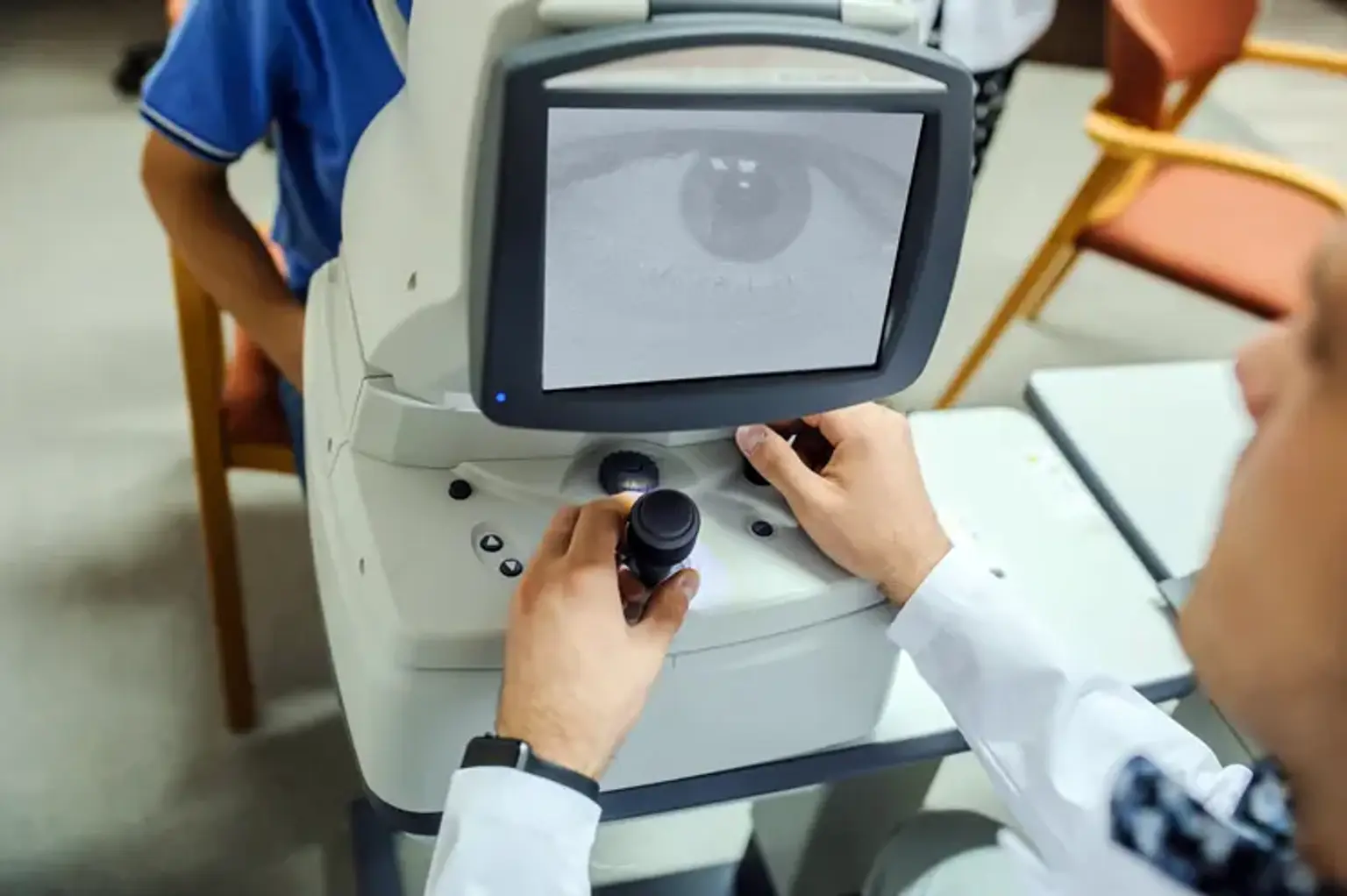
This article explores the cutting-edge retinal imaging technologies where South Korea is leading, the impact of these innovations on patient care, and what the future holds for this dynamic field.
How is Korea leading in retinal imaging technology?
how-is-korea-leading-in-retinal-imaging-technologyKorea's leadership in retinal imaging stems from a powerful combination of technological manufacturing prowess, significant government and private investment in R&D, and a highly competitive, technologically-adept healthcare system. The country is home to companies that are at the forefront of developing advanced diagnostic hardware. This is coupled with a clinical environment where top university hospitals and specialized eye clinics rapidly adopt and refine new technologies. This synergy creates a feedback loop: clinicians identify needs, engineers develop solutions, and the technology is quickly integrated into patient care, generating valuable data for further improvement.
Key factors contributing to Korea's leadership include:
Advanced R&D Infrastructure: A robust ecosystem of university research labs and corporate R&D centers focuses specifically on medical optics and imaging software.
High Clinical Adoption Rates: Korean ophthalmologists are early adopters of new technology, driven by a healthcare market that values precision and advanced diagnostic capabilities.
Integration with AI and Software: Korea’s strength in software and AI development is being directly applied to ophthalmology, creating smarter, more efficient diagnostic tools.
What is AI-powered Optical Coherence Tomography (OCT) and why is it so important?
what-is-ai-powered-optical-coherence-tomography-(oct)-and-why-is-it-so-importantAI-powered Optical Coherence Tomography (OCT) is a non-invasive imaging test that uses light waves to take cross-section pictures of the retina. The integration of Artificial Intelligence (AI) transforms it from a powerful imaging tool into a predictive diagnostic powerhouse. Standard OCT already provides micrometer-resolution images, allowing doctors to see each of the retina’s distinct layers. AI algorithms, trained on vast datasets of millions of retinal scans, can analyze these images in seconds to detect subtle, early-stage signs of disease that may be invisible to the human eye.
This is critically important for conditions like:
Diabetic Retinopathy: AI can identify microaneurysms and other early vascular changes, enabling intervention long before vision is affected.
Age-Related Macular Degeneration: Algorithms can detect the earliest signs of drusen yellow deposits under the retina or the transition from dry to the more severe wet AMD, which requires urgent treatment. A 2020 study demonstrated that a deep learning algorithm could detect referable diabetic retinopathy with high sensitivity and specificity.
Glaucoma: AI assists in measuring the retinal nerve fiber layer and tracking its thinning over time with a precision that is difficult to achieve manually, improving early diagnosis and monitoring of disease progression.
What are the latest breakthroughs in wide-field retinal imaging?
what-are-the-latest-breakthroughs-in-wide-field-retinal-imagingThe latest breakthroughs in wide-field retinal imaging involve capturing a panoramic, high-resolution view of the retina up to 200 degrees or more in a single image. This is a massive improvement over traditional fundus photography, which typically captures only a 30 to 50-degree field of view centered on the macula and optic nerve. Seeing the peripheral retina is crucial, as many significant pathologies, such as retinal tears, detachments, and diabetic changes, often begin in the periphery.
Korean innovators are advancing this technology through:
Ultra-Widefield (UWF) Fundus Cameras: These devices provide a comprehensive view of the retinal periphery without needing to dilate the pupils, making the screening process faster and more comfortable for patients.
UWF Fundus Autofluorescence (FAF): This specialized mode highlights the health of the retinal pigment epithelium (RPE), a key cell layer. It is invaluable for tracking the progression of diseases like AMD and inherited retinal dystrophies.
UWF OCT Angiography (OCTA): This technology maps the retinal blood vessels in incredible detail, all without the need for an injectable dye. It is revolutionizing the diagnosis and management of vascular diseases of the retina.
How do these imaging advances improve treatment for retinal diseases?
how-do-these-imaging-advances-improve-treatment-for-retinal-diseasesThese advanced imaging technologies directly translate to superior patient outcomes by enabling earlier diagnosis, more precise treatment planning, and objective monitoring of treatment response. When an ophthalmologist can see the earliest signs of cellular stress or vascular leakage, they can initiate treatment before irreversible vision loss occurs.
The clinical benefits are clear:
Early Intervention: Detecting a condition like wet AMD or proliferative diabetic retinopathy at its inception allows for timely treatment with anti-VEGF injections or laser therapy, preserving vision that would otherwise be lost.
Personalized Treatment: Detailed imaging from OCTA can help a surgeon pinpoint the exact location of abnormal blood vessels for more targeted laser application, sparing healthy tissue.
Objective Monitoring: AI-driven analysis of OCT scans can quantify changes in retinal thickness or fluid volume with superhuman accuracy. This provides objective data to determine if a treatment is working or if the strategy needs to be adjusted.
"I was diagnosed with early-stage diabetic retinopathy. Seeing the ultra-widefield image of my own eye and having the AI-assisted OCT scan explained to me was incredible. It’s comforting to know that this technology can catch problems so early. It gives me great hope for the future management of my condition." – An anonymous patient, Australia.
Recommended Clinics with Relevant Expertise in South Korea
recommended-clinics-with-relevant-expertise-in-south-koreaSouth Korea's top medical centers are equipped with state-of-the-art diagnostic technology, making them premier destinations for comprehensive eye care.
Website | Clinic Name | Best Known For | Address | Contact |
|---|---|---|---|---|
SNU Eye Clinic | Comprehensive University-Level Eye Care & Research | Gangnam-gu, Seoul, South Korea | ||
Gangnam Joeunnun Vision Clinic | Advanced Vision Correction & Premium Diagnostics | Gangnam-gu, Seoul, South korea | ||
Jryn Eye Clinic | Specialized Refractive Surgery & Patient-Centric Care | Busanjin-gu, Busan, South Korea | ||
Global Ubal Eye Center | Comprehensive Ophthalmology and Vision Correction | Jung-gu, Incheon, South Korea | ||
Cha University Bundang Medical Center | Major University Hospital with a focus on Complex Diseases | Bundang-gu, Seongnam-si, South Korea | ||
Chosun University Hospital | Leading Regional University Medical Center | Gwangju, Dong-gu, South Korea | ||
Kangdong Sacred Heart Hospital | University-Affiliated Hospital with Comprehensive Specialties | Gangdong-gu ,Seoul, South Korea | ||
Samyook Busan Adventist Hospital | General Hospital with a Dedicated Eye Care Center | Seo-gu, Busan, South Korea |
Recommended Treatment/Procedure Names with Average Costs in South Korea
recommended-treatmentprocedure-names-with-average-costs-in-south-koreaThe following procedures are commonly performed in South Korea's advanced ophthalmology centers. Costs are estimates and can vary based on the clinic and the complexity of the patient's case.
Treatment/Procedure Name | Treatment Duration | Hospitalization? | Avg Cost Range (USD) in S. Korea | Contact |
|---|---|---|---|---|
Retinal Diseases Treatment | 30-60 minutes | Not Needed | $300 - $2,500 | |
Vitreoretinal Surgery | 1 - 3 hours | Needed (1-2 days) | $5,000 - $12,000 | |
Retinal Detachment Surgery | 1 - 2 hours | Needed (1 day) | $4,500 - $9,000 | |
LASIK / LASEK | 15 - 20 minutes | Not Needed | $1,800 - $3,500 | |
SMILE Eye Surgery | 20 - 30 minutes | Not Needed | $2,500 - $4,500 | |
Cataract Surgery (Standard) | 15 - 30 minutes | Not Needed | $1,500 - $2,500 | |
Premium Cataract Surgery (IOLs) | 20 - 30 minutes | Not Needed | $3,000 - $6,000 | |
Implantable Collamer Lens (ICL) | 20 - 30 minutes | Not Needed | $4,000 - $7,000 | |
Glaucoma Treatment | 1-2 hours | Not Needed | $250 - $4,000 | |
Dry Eye Treatment (IPL/RF) | 15-20 minutes | Not Needed | $200 - $500 |
What Should Patients Know About These Future Technologies?
what-should-patients-know-about-these-future-technologiesNavigating the world of advanced medical technology can be complex. Here are answers to common questions about accessing these innovations in retinal imaging.
1. How soon will AI-driven diagnostics be widely available?
1.-how-soon-will-ai-driven-diagnostics-be-widely-availableIn South Korea, AI-assisted diagnostics are already in use at major university hospitals and leading private eye clinics. While not yet standard in every local clinic, their adoption is growing rapidly. It is expected that within the next 3-5 years, AI-powered analysis will become a standard component of retinal screening for at-risk populations.
2. Do these new technologies make treatments more expensive?
2.-do-these-new-technologies-make-treatments-more-expensiveWhile the initial cost of advanced imaging equipment is high, it does not always translate to a proportionally higher cost for the patient. In many cases, the efficiency and accuracy gained can lead to long-term savings by preventing costly complications or the need for more invasive procedures down the line. The cost for a specific scan like an OCT or wide-field photo is generally considered a standard diagnostic fee.
3. How can I find a clinic that uses these advanced techniques?
3.-how-can-i-find-a-clinic-that-uses-these-advanced-techniquesThe most reliable way is to inquire directly with top-tier medical centers and specialized eye clinics. University hospitals and clinics with a strong international patient department, such as those listed above, are most likely to have the latest generation of equipment. When inquiring, specifically ask if they utilize "wide-field imaging" and "AI-assisted OCT analysis" for retinal evaluations.
4. Is advanced retinal imaging painful or invasive?
4.-is-advanced-retinal-imaging-painful-or-invasiveNo. Nearly all modern retinal imaging technologies, including OCT, OCTA, and wide-field fundus photography, are completely non-invasive and painless. They do not touch the eye. The process typically involves sitting in front of a machine and looking at a target light for a few seconds while the scan is performed. Pupil dilation with eye drops may be required for some tests, but many new devices work without it.
5. What is the difference between standard fundus photography and wide-field imaging?
5.-what-is-the-difference-between-standard-fundus-photography-and-wide-field-imagingThe key difference is the field of view. A standard fundus camera captures a small, portrait view of the central retina, including the macula and optic nerve. This is like looking through a keyhole. Wide-field imaging captures a panoramic, landscape view that includes the far periphery of the retina. This is essential for detecting problems like retinal tears or diabetic changes that often start on the edges.
See the Future of Your Vision: Inquire About Advanced Retinal Care in Korea Now!
see-the-future-of-your-vision:-inquire-about-advanced-retinal-care-in-koreaTaking the first step toward protecting your sight with the world's most advanced technology is easier than you think. By inquiring about retinal care in South Korea, you gain access to leading ophthalmologists and cutting-edge diagnostic tools. Our process is designed to be seamless and transparent, with a dedicated Care Manager to support you from your initial inquiry to your post-treatment follow-up. Ensure your eyes receive the highest standard of care available. And Start Your Confidential Inquiry with CloudHospital.