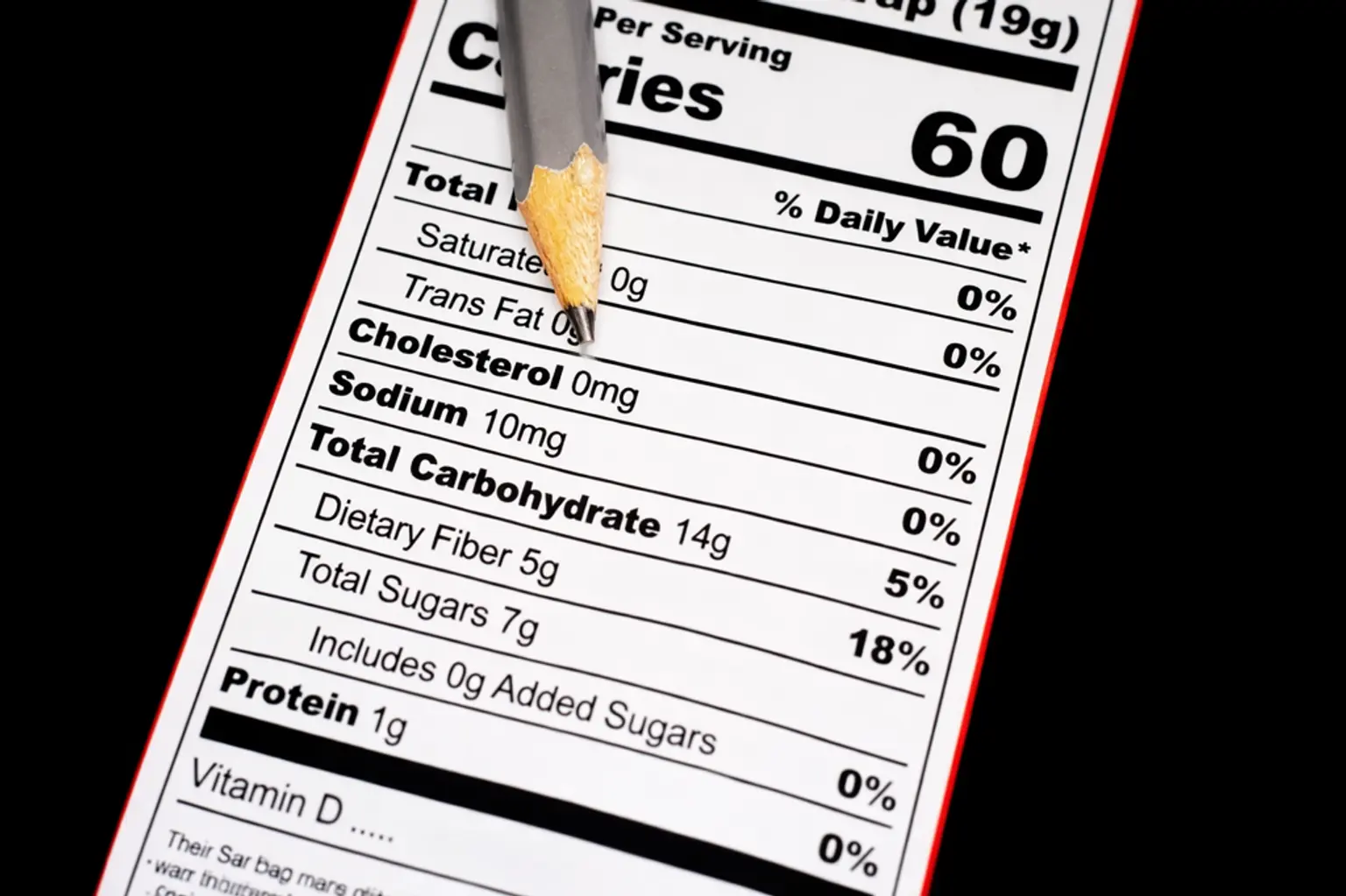

A new report says many shoppers misunderstand the Nutrition Facts label, even if they read it often. Experts highlight three frequent errors: treating % Daily Value as personal guidance, assuming label numbers are exact, and overlooking the difference between total and added sugars.
The % Daily Value is a guide, not a personal prescription
the--daily-value-is-a-guide-not-a-personal-prescriptionThe “% Daily Value” column is meant to help shoppers judge whether a serving contributes a little or a lot of a nutrient. But the report stresses that the percentage is built on a standard 2,000-calorie daily diet, which may not match an individual’s needs.
Calorie needs can vary widely based on factors such as age, height, weight, and activity level. The report gives examples using the USDA intake calculator: an active 50-year-old woman who is 5’7” may need about 2,100 calories at 120 pounds but around 2,500 calories at 190 pounds. It also cites a very active 6-foot, 180-pound man of the same age needing about 3,350 calories and a 35-year-old breastfeeding woman (5’5”, 170 pounds) needing about 2,600 calories.
Because of this range, the report suggests using a broader rule of thumb that works across calorie levels:
- Around 5% Daily Value or less is considered low in a nutrient.
- Around 20% daily value or more is considered high in a nutrient.
It adds that most people should aim for more fiber, vitamin D, calcium, iron, and potassium, while keeping saturated fat, sodium, and added sugars lower. Hope Barkoukis, PhD, chair of the nutrition department at Case Western Reserve University School of Medicine, gives an example: if a product is around 20% DV for sodium, it’s a high source, while a low % for total carbohydrates suggests it’s a low source of that nutrient.
The label numbers have legal “wiggle room.”
the-label-numbers-have-legal-wiggle-roomMany shoppers assume the label is exact because it looks precise. The report says it isn’t. By law, there is allowable variability:
- For nutrients people are advised to limit calories, sugars, saturated fat, and sodium; actual amounts can be up to 20% higher than what the label shows.
- For naturally occurring nutrients in a food, amounts can be up to 20% lower than what appears on the label.
- Only added nutrients in fortified foods are required to be precise.
The report explains this flexibility exists because manufacturers can’t control every natural variation in food, such as differences from batch to batch in frozen vegetables.
It also notes that the 2,000-calorie baseline and the Daily Value system can be “fuzzy” in practice. Frohlich says 2,000 was chosen partly because it is easy for people to calculate with, and the label format reflects the reality that shoppers do not use it with mathematical precision.
Finally, the report explains that Daily Values are derived from two different concepts:
- Recommended Dietary Allowance (RDA): the average amount nearly all healthy people need daily.
- Adequate Intake (AI): an estimate used when research is not strong enough to set a firm requirement.
On labels, the Daily Value often but not always matches an RDA or AI, which is one reason the report advises reading labels in “big picture” terms, comparing similar products, and focusing on whether something is generally high or low.
"Total Sugars" vs "Added Sugars": two lines, different meanings.
total-sugars-vs-added-sugars-two-lines-different-meanings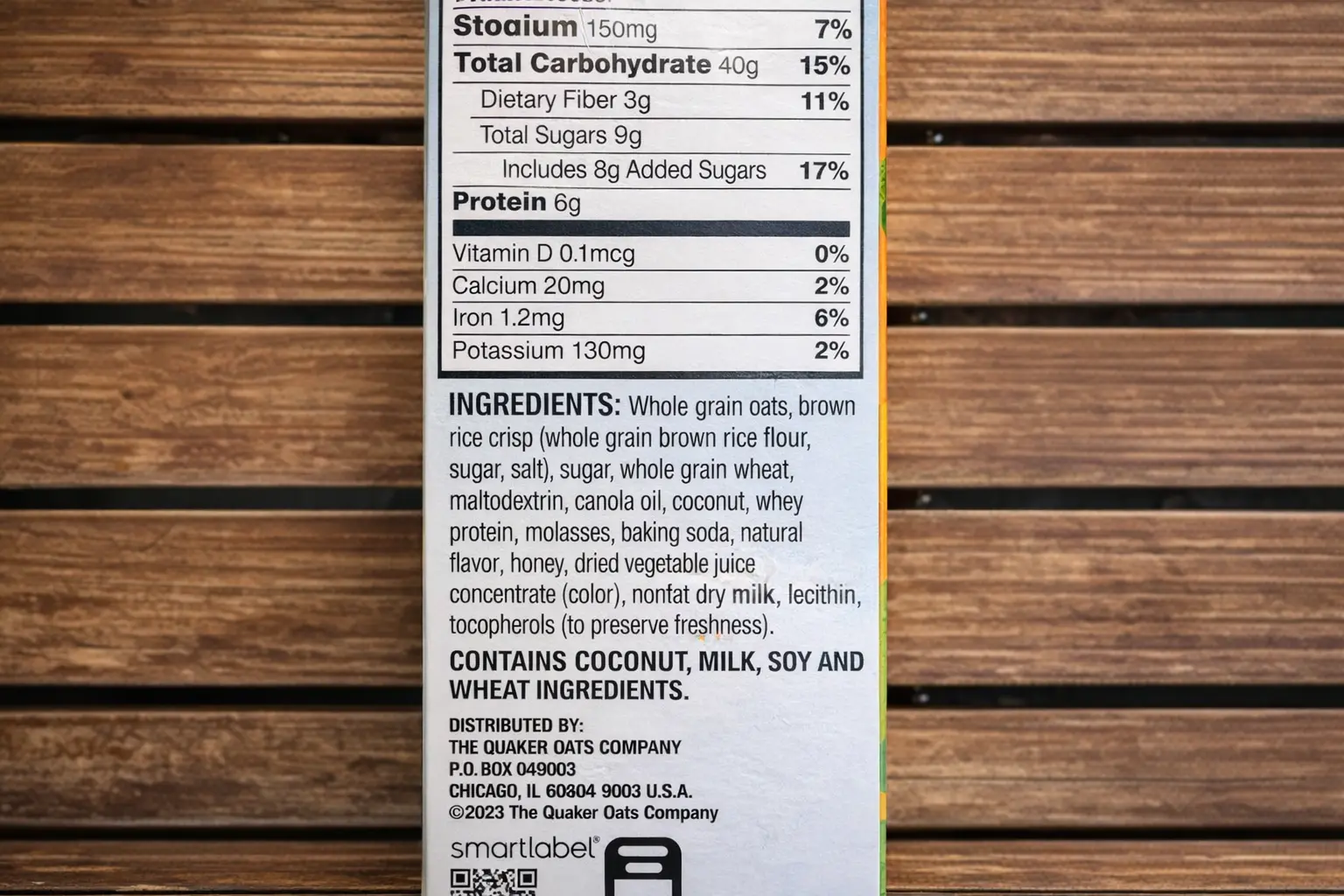
Sugar content appears under Total Carbohydrates, but the report emphasizes there are usually two separate entries: Total Sugars and Added Sugars. Unless a healthcare professional has told someone to track total sugar grams, the report says the added sugars number is the one that matters most.
Joan Salge Blake, EdD, a dietitian and nutrition professor at Boston University and host of the nutrition and health podcast Spot On!, says this is a frequent misunderstanding. She gives an example: people may avoid milk because it lists sugar, not realizing milk contains lactose, a naturally occurring sugar, and can have no added sugar a confusion she says can happen even among nutrition students.
The report adds that the updated Dietary Guidelines for Americans emphasize this distinction and recommend no more than 10 grams of added sugar from any one meal.
For patients trying to manage nutrition choices, especially those watching sodium, saturated fat, or added sugars, this report suggests that reading labels isn’t only about scanning a single number. The “% Daily Value” may help compare products, but it may not reflect a person’s actual calorie needs. The report also highlights that label values can vary within legal limits, which may matter for people closely tracking nutrients.
For medical travelers or caregivers supporting someone abroad, the key takeaway is practical: comparing similar items and checking added sugars (not just total sugars) may reduce confusion when shopping in unfamiliar settings where brands and serving sizes differ.
FAQs
faqsQ1: Why might the % Daily Value on a Nutrition Facts label not apply to me?
Because it is based on a standard 2,000-calorie diet, while individual calorie needs vary by factors like age, weight, height, and activity level.
Q2: What does “5% DV” or “20% DV” generally indicate?
The report says 5% Daily Value or less is considered low in a nutrient, while 20% or more is considered high.
Q3: Are Nutrition Facts label numbers exact?
Not always. The report says some nutrients can be up to 20% higher than stated, while other naturally occurring nutrient amounts can be up to 20% lower. Added nutrients in fortified foods must be precise.
Q4: What is the difference between total sugars and added sugars?
"Total Sugars" includes naturally occurring sugars and added sugars. The report says added sugars are typically the more important number to watch unless a health professional advises counting total sugar grams.
Q5: Why can milk list sugar but still have no added sugar?
The report explains milk contains lactose, a natural sugar. People may misread that as added sugar even when none is added.
Medical Disclaimer
medical-disclaimer“This content is for informational purposes only and does not replace professional medical advice.”