Introduction
Strabismus, commonly known as squint, is a condition where the eyes do not align properly. One eye may look straight ahead while the other turns inward, outward, upward, or downward. This misalignment can be constant or intermittent and may affect one or both eyes. Strabismus can develop in childhood or adulthood and, if left untreated, can lead to vision problems such as amblyopia (lazy eye) or double vision (diplopia).
Timely diagnosis and early treatment are crucial, especially in children, as their visual system is still developing. Adults with strabismus may experience self-esteem issues, making treatment not just a medical necessity but also an emotional and psychological one. Fortunately, several effective treatment options exist, ranging from non-invasive therapies to surgical correction.
Understanding Strabismus
Types of Strabismus
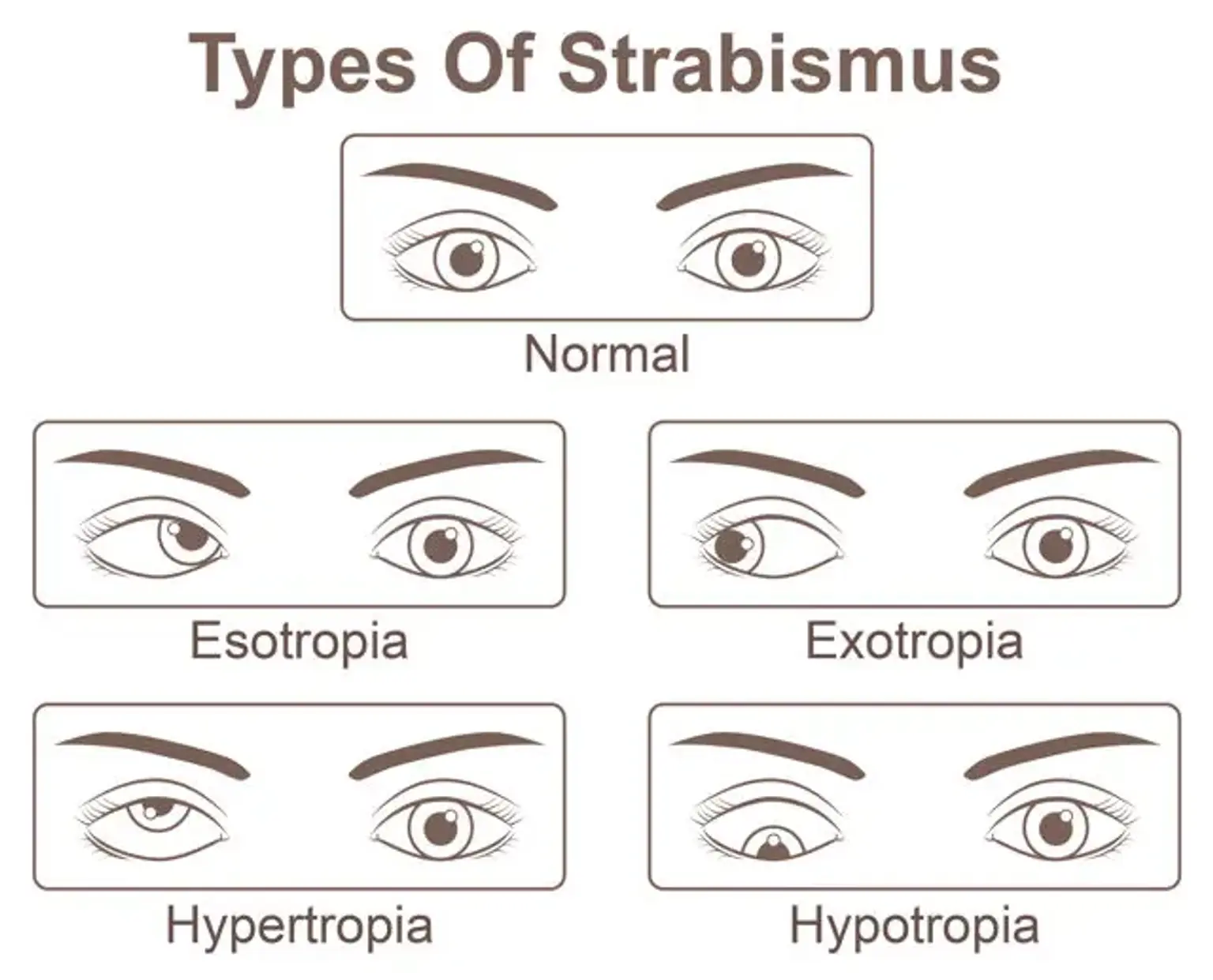
Strabismus is classified based on the direction of the eye misalignment:
Esotropia – One eye turns inward (crossed eyes).
Exotropia – One eye turns outward (wall-eyed appearance).
Hypertropia – One eye drifts upward.
Hypotropia – One eye drifts downward.
Some cases of strabismus are constant, while others are intermittent, occurring only at certain times, such as when tired or focusing on near objects.
Common Causes of Strabismus
Several factors contribute to strabismus development, including:
Genetics – A family history of strabismus increases the risk.
Eye muscle imbalance – Weak or overactive eye muscles can cause misalignment.
Nerve abnormalities – Conditions affecting the cranial nerves (such as sixth nerve palsy) can lead to strabismus.
Refractive errors – Uncorrected farsightedness (hyperopia) can cause the eyes to cross in an attempt to focus.
Neurological disorders – Conditions like cerebral palsy, Down syndrome, or brain injury can impact eye movement control.
Childhood vision development issues – If one eye sees better than the other, the brain may ignore the weaker eye, causing it to drift.
Symptoms of Strabismus
Misaligned eyes (one eye looking straight, the other turned).
Double vision (diplopia) – common in adults with acquired strabismus.
Difficulty focusing on objects.
Head tilting or squinting to see better.
Eye strain or headaches due to misalignment.
Loss of depth perception (stereopsis), making activities like driving difficult.
Diagnosis and Initial Evaluation
Early detection is key to successful strabismus treatment. Diagnosis involves a series of eye exams conducted by an ophthalmologist or optometrist to assess the severity and underlying cause of the misalignment.
Diagnostic Tests for Strabismus
Visual Acuity Test – Measures how clearly each eye sees.
Cover Test – Determines eye misalignment by covering and uncovering each eye.
Ocular Motility Test – Evaluates eye movement and coordination.
Refraction Test – Checks for refractive errors like farsightedness or nearsightedness.
Retinal Examination – Assesses the retina and optic nerve for structural issues.
Neurological Assessment – If nerve damage is suspected, further tests like MRI or CT scans may be required.
Once diagnosed, the doctor will determine the best treatment plan based on the patient’s age, severity, and underlying cause of strabismus.
Non-Surgical Treatment Options
Mild to moderate cases of strabismus can often be corrected without surgery, especially in children. Common non-surgical treatments include:
1. Glasses & Contact Lenses
Used when refractive errors (such as farsightedness) contribute to strabismus.
Helps reduce eye strain and correct alignment by improving focus.
2. Vision Therapy (Eye Exercises)
Helps strengthen weak eye muscles and improve coordination.
Used for intermittent strabismus and cases related to eye-tracking issues.
Includes exercises like pencil push-ups, convergence training, and fusion exercises.
3. Eye Patch Therapy
Used for children with amblyopia (lazy eye) caused by strabismus.
The stronger eye is covered, forcing the weaker eye to work harder.
Works best when started before the age of 8.
4. Botox Injections for Strabismus
Temporarily paralyzes overactive eye muscles, allowing the weaker eye to align properly.
Best for adults with recent-onset strabismus or those unable to undergo surgery.
Effects last 3–4 months, and repeated treatments may be needed.
Non-surgical treatments are often the first line of therapy but may not work for all patients, especially those with severe or congenital strabismus. In such cases, surgical intervention is recommended.
Diagnosis and Initial Evaluation
Early detection of strabismus (squint) is crucial for successful treatment. The condition is often identified during routine pediatric eye exams, but it can also develop later in life due to neurological conditions, trauma, or refractive errors.
How Is Strabismus Diagnosed?
An ophthalmologist or optometrist will perform a comprehensive eye exam that includes several tests to assess eye alignment, vision clarity, and muscle function.
Common Diagnostic Tests for Strabismus:
Visual Acuity Test
Measures how well each eye sees at different distances using an eye chart.
Helps determine whether a refractive error (e.g., farsightedness) is causing the misalignment.
Cover Test
The doctor covers and uncovers each eye to observe how the uncovered eye adjusts.
This helps identify which eye is misaligned and in which direction.
Ocular Motility (Eye Movement) Test
Assesses how the eyes move when tracking an object.
Determines if eye muscles are working properly and moving in coordination.
Refraction Test
A lens-based test that checks for farsightedness, nearsightedness, or astigmatism.
Uncorrected refractive errors can sometimes contribute to strabismus.
Binocular Vision & Depth Perception Tests
Evaluates whether both eyes are working together.
Strabismus can reduce stereopsis (3D vision), affecting depth perception.
Retinal Examination
Uses specialized lenses and light to examine the retina and optic nerve.
Helps rule out neurological causes such as optic nerve damage.
Neurological Evaluation (if needed)
MRI or CT scans may be ordered if strabismus is suspected to be caused by brain tumors, stroke, or nerve damage.
Once diagnosed, treatment depends on the type, severity, and underlying cause of strabismus.
Non-Surgical Treatment Options
Many cases of strabismus can be managed without surgery, particularly in young children and cases caused by refractive errors or weak eye muscles. Here are some effective non-surgical approaches:
1. Glasses & Contact Lenses
If strabismus is due to uncorrected vision problems, wearing prescription glasses can help realign the eyes.
Special prism lenses may be used to help redirect light and improve binocular vision.
2. Vision Therapy (Eye Exercises)
A structured program of eye exercises designed to strengthen the muscles and improve coordination.
Common exercises include:
Pencil push-ups – training the eyes to focus on a moving object.
Fusion exercises – improving the brain's ability to merge images from both eyes.
Computer-based training – interactive programs that enhance eye-tracking and alignment.
3. Eye Patch Therapy (Occlusion Therapy)
Used primarily for amblyopia (lazy eye) that often accompanies strabismus.
The stronger eye is covered with a patch to force the weaker eye to work harder.
Works best if started before age 8, when the visual system is still developing.
4. Botox Injections for Strabismus
Botulinum toxin (Botox) is injected into an overactive eye muscle, causing temporary paralysis.
This allows the weaker muscle to regain control and improve alignment.
Effective for adults with acquired strabismus or those who cannot undergo surgery.
Results typically last 3–4 months, but repeated treatments may be needed.
When Is Surgery Needed for Strabismus?
While non-surgical treatments can help many patients, severe or persistent strabismus may require surgical correction. Surgery is typically recommended when:
The eye misalignment is significant and affecting vision.
Non-surgical treatments (glasses, therapy) have not worked.
The patient is experiencing double vision.
The misalignment is causing psychological distress or social discomfort.
8. Surgical Treatment for Strabismus
Overview of Strabismus Surgery
Strabismus surgery corrects eye misalignment by adjusting the eye muscles responsible for movement. The goal is to restore proper alignment, improve binocular vision, and reduce strain.
Types of Strabismus Surgery
Recession Surgery
The surgeon weakens an overactive muscle by detaching and repositioning it further back on the eye.
This reduces excessive pulling and helps realign the eyes.
Resection Surgery
Involves tightening a weak muscle by shortening it, increasing its strength.
Often combined with recession surgery on the opposite eye for balance.
Adjustable Suture Surgery
Used in adult patients who can provide feedback.
After surgery, the sutures can be adjusted to fine-tune the alignment.
What Happens During Surgery?
Procedure Time: Usually takes 30–90 minutes and is performed under general anesthesia (for children) or local anesthesia (for adults).
Incision: The surgeon makes a small cut in the conjunctiva (the clear covering of the eye) to access the muscles.
Muscle Adjustment: Depending on the type of surgery, muscles are either weakened, tightened, or repositioned.
Recovery: Patients go home the same day, with full healing taking a few weeks.
Recovery Process & Post-Surgery Care
Mild discomfort and redness are normal for a few days.
Eye drops or ointments are prescribed to prevent infection and inflammation.
Patients are advised to avoid strenuous activities for at least a week.
Vision may be slightly blurry initially, but it improves as the brain adapts.
Vision Therapy for Strabismus
Vision therapy is a non-surgical treatment aimed at improving eye coordination, muscle control, and depth perception. It is particularly effective for individuals with intermittent strabismus or convergence insufficiency, where the eyes struggle to work together.
How Vision Therapy Works
A specialized optometrist or vision therapist designs a customized program of eye exercises and visual training techniques to:
Strengthen weak eye muscles.
Improve binocular vision (how both eyes work together).
Enhance brain-eye communication.
Common Vision Therapy Techniques for Strabismus
Pencil Push-ups
The patient focuses on a small object (like a pencil tip) while bringing it closer to the nose.
Helps train the eyes to work together and improves convergence.
Brock String Exercise
A string with several colored beads is used to practice focusing at different points.
Improves depth perception and eye alignment.
Prism Therapy
Special prism glasses help train the brain to fuse images from both eyes correctly.
Reduces double vision and encourages proper alignment.
Computer-Based Vision Therapy
Interactive digital programs use visual stimuli to stimulate eye coordination.
Enhances neural pathways for better control over eye movements.
Who Benefits from Vision Therapy?
Children with convergence insufficiency (difficulty keeping both eyes aligned when focusing).
Individuals with mild to moderate strabismus (less than 15 degrees of misalignment).
Post-surgical patients who need fine-tuning of eye coordination.
However, vision therapy is not effective for severe cases of strabismus with large angles of deviation. These cases often require surgical correction.
Eye Patch Therapy for Amblyopia (Lazy Eye)
Eye patch therapy is a widely used method to treat amblyopia, a condition where the brain favors one eye over the other, leading to poor vision in the weaker eye.
How Does Eye Patching Work?
A patch is placed over the stronger eye to force the brain to use the weaker eye.
Over time, this stimulates visual development and prevents permanent vision loss.
Who Needs Eye Patch Therapy?
Children under 8 years old with strabismus-related amblyopia.
Patients whose brain ignores input from one eye, causing functional blindness.
Duration & Effectiveness
The duration depends on the severity of amblyopia—from a few weeks to several months.
The younger the patient, the higher the success rate.
In some cases, atropine eye drops are used as an alternative to patching, temporarily blurring vision in the stronger eye to force the weaker eye to work.
Eye patch therapy is not a cure for strabismus itself but is often used in combination with other treatments to improve overall eye function.
Botox Injections for Strabismus
Botox (Botulinum toxin A) has emerged as a minimally invasive treatment for strabismus. It temporarily weakens overactive eye muscles, allowing the weaker muscles to regain control and realign the eyes.
How Botox for Strabismus Works
A small dose of Botox is injected into the overacting eye muscle.
The muscle relaxes, allowing the opposing muscle to pull the eye into proper alignment.
Over several weeks, the brain adjusts to the new alignment.
Advantages of Botox Treatment
Minimally invasive – No incisions or surgery required.
Quick procedure – Performed in minutes under local anesthesia.
Temporary effects – Lasts 3 to 4 months, allowing assessment before permanent surgery.
Useful for acquired strabismus (due to stroke, nerve damage, or trauma).
Who Can Benefit from Botox for Strabismus?
Adults with sudden-onset strabismus (such as post-stroke patients).
Patients with mild to moderate misalignment who want a non-surgical option.
Individuals who have undergone previous strabismus surgery and need minor corrections.
Limitations of Botox for Strabismus
Not a permanent solution—effects wear off over time.
May cause temporary double vision as the brain adjusts to the change.
Requires repeated treatments for long-term results.
While Botox is a promising alternative, surgical intervention remains the gold standard for correcting severe cases of strabismus.
Types of Eye Muscle Surgery for Strabismus
Strabismus surgery aims to correct eye misalignment by adjusting the eye muscles. The procedure varies based on the type and severity of strabismus.
Common Types of Strabismus Surgery
Recession Surgery (Weakening a Muscle)
The surgeon relocates an overactive muscle further back on the eye, reducing its strength.
Used for cases where an eye pulls too much in one direction.
Resection Surgery (Strengthening a Muscle)
A portion of a weak muscle is removed to make it stronger.
Helps correct outward or downward drifting of the eye.
Adjustable Suture Surgery
Used in adults who can provide feedback after surgery.
Allows post-surgical adjustments for better alignment.
Strabismus surgery is usually outpatient and takes 30–90 minutes under anesthesia. Most patients recover within a few weeks.
What Happens During Surgery?
Surgical Procedure Steps
Anesthesia – General anesthesia (for children) or local anesthesia (for adults).
Muscle Adjustment – The surgeon repositions the eye muscles using small incisions.
Suturing – Muscles are secured, and the eye heals naturally over time.
Post-Surgical Care
Mild redness, swelling, and discomfort for a few days.
Eye drops or ointments to prevent infection.
Avoid strenuous activities for about a week.
Vision may be blurry initially, improving as the brain adjusts.
Advanced Treatment Approaches
Minimally Invasive Strabismus Surgery
Uses smaller incisions, leading to faster healing and less discomfort.
Reduces post-surgical scarring and complications.
Robotic-Assisted Eye Surgery
Enhances precision in muscle adjustment.
Lowers the risk of overcorrection or undercorrection.
Eye-Tracking Therapy & Neuroplasticity-Based Treatments
Digital vision therapy to retrain brain-eye coordination.
Useful for neurological strabismus cases.
Strabismus in Children vs. Adults
Treatment Differences
Children: Early treatment is crucial to prevent lazy eye (amblyopia).
Adults: Surgery or Botox may be required if vision therapy fails.
Social and Psychological Impact
Children may face challenges in school and social interactions.
Adults often experience self-consciousness and professional limitations.
Treating strabismus improves both vision and confidence, enhancing quality of life.
Success Rates & Long-Term Outcomes
Strabismus treatments, whether surgical or non-surgical, have high success rates when performed correctly.
Effectiveness of Different Treatments
Glasses & Vision Therapy – Effective for mild cases, especially in children.
Botox Injections – Works well for temporary correction but may need repeated treatments.
Surgery – Success rate of 75–90%, though some patients may require additional procedures.
Risk of Recurrence
In some cases, eye misalignment returns over time, requiring further treatment.
Regular follow-ups with an eye specialist help prevent relapse.
Risks and Complications of Treatment
Non-Surgical Risks
Eye patching can cause frustration in children.
Botox injections may lead to temporary double vision.
Surgical Risks
Temporary redness and swelling.
Undercorrection or overcorrection, sometimes requiring a second procedure.
Rare risks include infection or scarring.
Despite these risks, most patients recover well and experience significant improvement.
Cost of Strabismus Treatment
The cost varies based on the treatment type and location.
Estimated Costs:
Glasses & Vision Therapy: $100 – $1,500
Botox Injections: $500 – $2,000 per session
Strabismus Surgery: $3,000 – $8,000 (depending on complexity)
Insurance may cover treatment if it is deemed medically necessary.
Frequently Asked Questions (FAQs)
Can Strabismus Be Cured Permanently?
Yes, especially with early intervention. Surgery provides a long-lasting solution, though some cases may need adjustments later.
What Age Is Best for Strabismus Treatment?
Children: Best results if treated before age 7–8.
Adults: Can be treated at any age, though recovery may take longer.
Can Strabismus Be Fixed Without Surgery?
Yes, mild cases respond well to glasses, vision therapy, or Botox. However, severe cases require surgery.
Does Strabismus Affect Daily Life?
If untreated, it can impact depth perception, confidence, and career choices, especially in visual-demanding jobs like driving.
Conclusion
Strabismus, or squint, is a treatable condition with multiple effective options, including glasses, vision therapy, Botox injections, and surgery. Early diagnosis and intervention, especially in children, can prevent long-term vision issues such as amblyopia (lazy eye).
For adults, treatment not only improves eye alignment and function but also enhances self-confidence and quality of life. While non-surgical methods work for mild cases, surgery remains the best option for severe misalignment, offering a 75–90% success rate.
With advancements in minimally invasive techniques, robotic-assisted surgery, and neuroplasticity-based therapies, strabismus treatment has become safer, more effective, and widely accessible. If you or a loved one has strabismus, consulting an ophthalmologist or optometrist is the first step toward better vision and a brighter future.