


The clinical information regarding Chemical Peels in this article has been rigorously verified against the latest guidelines from the American Academy of Dermatology (AAD) and primary research from databases like PubMed. This piece was reviewed for accuracy and patient-centric clarity and was last updated in October 2023.
Introduction
introduction-to-syphilisA chemical peel is a cornerstone procedure in dermatology, renowned for its ability to rejuvenate the skin and address a wide range of cosmetic concerns. It is a form of chemical exfoliation used to improve the appearance of the skin on the face, neck, or hands. This guide provides a detailed examination of the procedure, from its underlying science to the recovery process, for individuals considering this transformative treatment.
What Do Chemical Peels Do For Your Skin?
what-do-chemical-peels-do-for-your-skin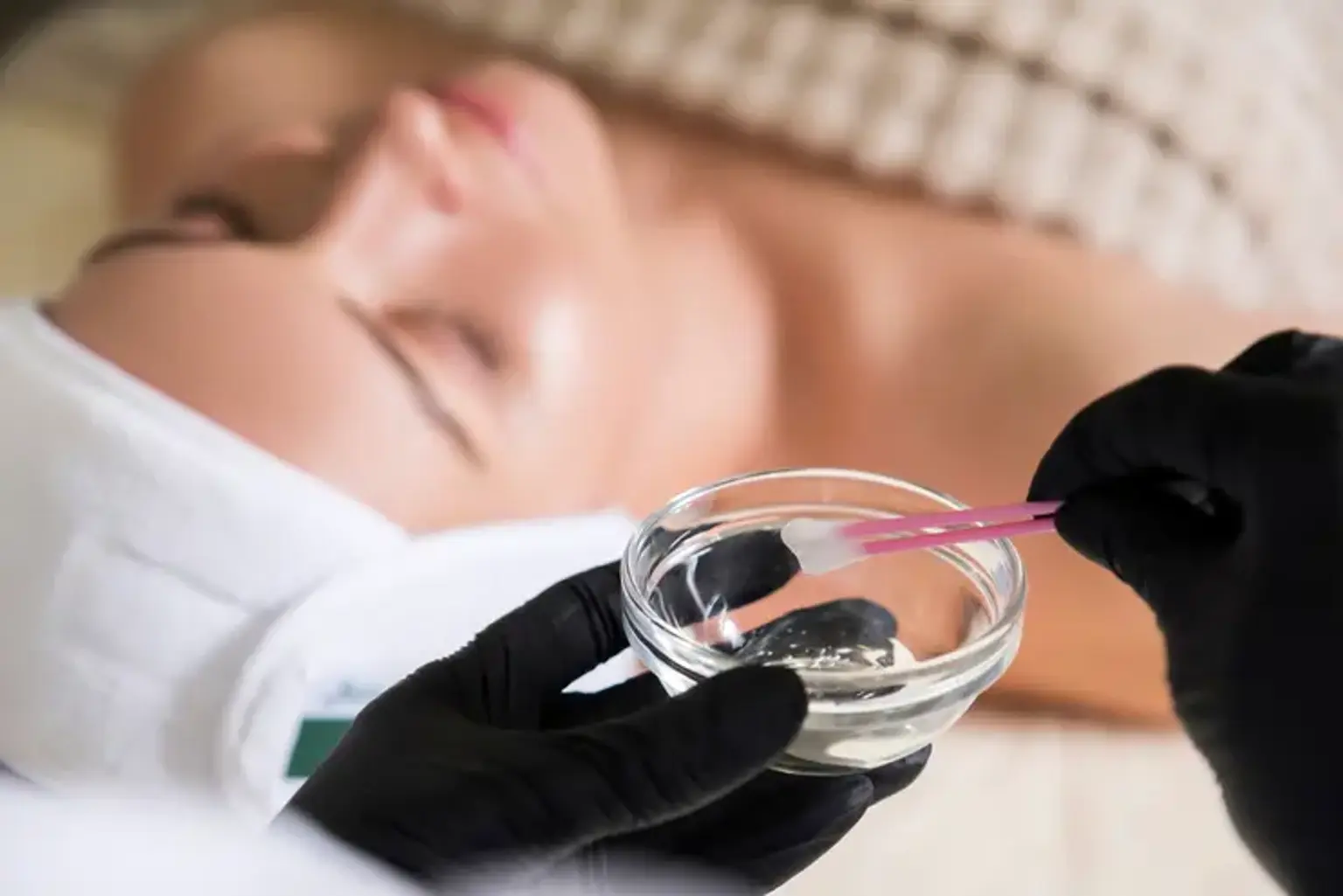
A chemical peel improves skin texture and appearance by applying a specialized chemical solution that causes the outer layer of skin to exfoliate and eventually peel off. This controlled removal of damaged skin cells reveals the smoother, less wrinkled, and more evenly pigmented skin underneath. The process also stimulates the production of new collagen and elastin, which are essential for skin firmness and elasticity. The result is a revitalized complexion with reduced imperfections.
What Are the Key Benefits of Chemical Peels?
what-are-the-key-benefits-of-chemical-peelsUnder the care of a qualified dermatologist, chemical peels offer significant aesthetic and therapeutic benefits.
Improved Skin Texture: Reduces roughness for a smoother, softer feel.
Reduced Fine Lines and Wrinkles: Particularly effective for fine lines caused by sun damage and aging.
Corrected Pigmentation Issues: Fades age spots, sun spots, freckles, and melasma.
Acne and Acne Scar Treatment: Unclogs pores to manage active acne and can diminish the appearance of superficial acne scars.
Enhanced Radiance: Removes dull, dead skin cells, revealing a brighter, more luminous complexion.
Increased Skincare Efficacy: By removing the outermost barrier of dead skin, peels allow for better penetration and effectiveness of regular skincare products.
Who is a Good Candidate for a Chemical Peel?
who-is-a-good-candidate-for-a-chemical-peelA chemical peel can be an excellent treatment option for many, but ideal candidates generally possess specific characteristics. A dermatologist will determine your suitability during a consultation.
Skin Concerns: Individuals looking to treat fine lines, chronic sun damage, pigmentation irregularities, acne, or shallow acne scars.
Skin Type: Fair skinned and light haired patients are often considered ideal candidates. However, peels can be successfully performed on individuals with darker skin tones, though this requires careful selection of the peeling agent to minimize risks of post inflammatory hyperpigmentation.
Realistic Expectations: Candidates must understand that while peels can produce dramatic improvements, they may not erase all imperfections. Multiple sessions are often required for optimal results.
Good General Health: You should not have active skin infections, open wounds, or a history of abnormal scarring.
What Are the Risks and Contraindications of Chemical Peels?
what-are-the-risks-and-contraindications-of-chemical-peelsWhile generally safe when performed by an expert, chemical peels have potential risks and contraindications. The intensity of these risks correlates with the depth of the peel.
Common Side Effects: Temporary redness, dryness, stinging, and slight swelling are normal.
Potential Risks:
Changes in Skin Color: Both hyperpigmentation and hypopigmentation can occur, with a higher risk in deeper peels.
Infection: Bacterial, fungal, or viral infections can occur, especially a reactivation of the herpes simplex virus.
Scarring: Though rare, there is a small risk of scarring, particularly with deep peels.
Contraindications:
Active skin infections or diseases.
A history of keloid or abnormal scar formation.
Use of certain medications, like isotretinoin for acne, within the last six months.
Pregnancy or breastfeeding.
What Are the Steps of the Chemical Peel Procedure?
what-are-the-steps-of-the-chemical-peel-procedureThe patient journey for a chemical peel follows a clear, structured path from initial consultation to the final result.
Before the Procedure: Consultation and Preparation
before-the-procedure:-consultation-and-preparationYour journey begins with a thorough consultation. The dermatologist will assess your skin type, discuss your goals, and review your medical history. They will recommend the most appropriate type of peel superficial Glycolic acid, Salicylic acid, medium Trichloroacetic acid TCA or deep. You may be prescribed a pre-peel skincare regimen to prepare your skin, which can improve results and reduce complication risks. You will be instructed to avoid sun exposure and certain topical products before your appointment.
During the Procedure: The Peel Application
during-the-procedure:-the-peel-applicationOn the day of the procedure, your skin will be thoroughly cleansed to remove any oils. The chemical solution is then carefully applied to the treatment area. You may feel a mild to moderate stinging or burning sensation as the solution works, which typically lasts for a few minutes. The dermatologist monitors the skin's reaction closely to ensure the treatment proceeds as planned. The entire process is relatively quick, often taking less than 30 minutes.
Immediately After the Procedure: The Initial Recovery Phase
immediately-after-the-procedure:-the-initial-recovery-phaseAfter the designated time, the chemical solution may be neutralized and removed. A cool compress and soothing ointment might be applied to your skin. Depending on the peel's depth, your skin will appear red and feel sensitive, similar to a sunburn. For medium or deep peels, more significant redness and swelling can be expected. You will be given specific post-procedure care instructions.
"After my series of peels, the texture of my skin completely changed. The stubborn rough patches are gone, and my makeup goes on so much more smoothly. I finally have the clear, even skin tone I've always wanted." – an anonymous patient, Australia.
What is the Recovery Timeline After a Chemical Peel?
what-is-the-recovery-timeline-after-a-chemical-peelRecovery varies significantly based on the type of peel performed.
Superficial Peel (AHA, BHA):
Downtime: Minimal to none.
Timeline: Skin will be red and may flake for 3-7 days. You can typically resume normal activities immediately, though sun protection is critical.
Medium Peel (TCA):
Downtime: 5 to 7 days.
Timeline: Redness and swelling are more pronounced. The skin will crust and peel over 7-14 days, revealing new skin underneath. Strict adherence to post-care instructions is necessary.
Deep Peel (Phenol):
Downtime: Significant, often requiring 2-3 weeks at home.
Timeline: This is the most intensive option, with severe redness and swelling. The peeling process is extensive. Full healing can take several months, but results are the most dramatic and long-lasting.
Recommended Clinics with Relevant Expertise in South Korea
recommended-clinics-with-relevant-expertise-in-south-koreaSouth Korea is a global leader in advanced dermatological care. The following clinics are noted for their expertise in a wide range of skin treatments, including specialized peeling and resurfacing procedures.
Website | Clinic Name | Best Known For | Address | Contact |
|---|---|---|---|---|
All-line Clinic | Facial & Body Contouring, Anti-Aging | Mapo-gu, Seoul, South Korea | ||
Plans Clinic | Customized Plastic Surgery & Dermatology Plans | Gangnam-gu, Seoul, South Korea | ||
BLS Clinic | Lifting, Laser Treatments, and Skin Care | Gangnam-gu, Seoul, South Korea | ||
Natural Beauty Clinic | Natural-Result Aesthetics & Dermatology | Gangnam-gu, Seoul, South Korea | ||
Clinic Trinity Raffaello | Premium Anti-Aging & Aesthetic Treatments | Gangnam-gu, Seoul, South Korea | ||
Cheongdam Oracle Dermatology Clinic | Comprehensive Dermatology & Laser Procedures | Gangnam-gu, Seoul, South Korea | ||
Oracle Clinic Cheongdam | Advanced Dermatology & Skin Rejuvenation | Gangnam-gu, Seoul, South Korea | ||
Cheongdam Qbq Clinic | Personalized, High-Quality Skin Treatments | Gangnam-gu, Seoul, South Korea |
Recommended Treatment/Procedure Names with Average Costs in South Korea
recommended-treatmentprocedure-names-with-average-costs-in-south-koreaThe clinics above offer a vast array of cutting edge procedures, often combined with peels for superior results. Costs are estimates and can vary based on clinic, doctor's expertise, and individual patient needs.
Treatment/Procedure Name | Treatment Duration | Hospitalization? | Avg Cost Range (USD) in S. Korea | Contact |
|---|---|---|---|---|
Acne Peeling | 30-45 mins | Not Needed | $100 - $300 | |
High Fat Dissolving Injection | 20-30 mins | Not Needed | $400 - $800 | |
Titanium Lifting | 60-90 mins | Not Needed | $1,500 - $3,000 | |
Face Onda Lifting | 30-45 mins | Not Needed | $800 - $1,500 | |
Body Onda Lifting | 45-60 mins | Not Needed | $1,000 - $2,000 | |
Combination Skin Boosters | 45-60 mins | Not Needed | $500 - $1,200 | |
Rejuran Healer | 20-30 mins | Not Needed | $300 - $600 | |
Juvelook | 30-45 mins | Not Needed | $400 - $700 | |
Skin Botox – Full Face | 30 mins | Not Needed | $350 - $650 | |
Mirajet Needle-Free Injector | 30-60 mins | Not Needed | $600 - $1,200 | |
Thermage FLX | 60-90 mins | Not Needed | $1,800 - $3,500 | |
Ulthera | 60-90 mins | Not Needed | $1,500 - $3,000 | |
Pigmentation & Whitening Laser | 30-60 mins | Not Needed | $200 - $500 | |
Hydrogen Toning | 45 mins | Not Needed | $150 - $350 |
Frequently Asked Questions (FAQs) about Chemical Peels
frequently-asked-questions-(faqs)-about-chemical-peels1. How much does a chemical peel cost in South Korea?
1.-how-much-does-a-chemical-peel-cost-in-south-koreaThe cost of a chemical peel in South Korea depends heavily on the type. A light, superficial peel (AHA/BHA) might cost between $100 and $300 USD per session. A medium depth TCA peel is more involved and can range from $400 to $800. Deep phenol peels are significantly more expensive. Prices vary by clinic reputation and the complexity of the patient's case.
2. Is the chemical peel procedure painful?
2.-is-the-chemical-peel-procedure-painfulPatients typically report a sensation of stinging, tingling, or warmth during the application, which is usually well tolerated and subsides within minutes. Superficial peels are very mild. Medium peels can be more intense, and a cooling fan is often used for comfort. For deep peels, local anesthesia and sedation are used to ensure the patient is comfortable.
3. How many chemical peel sessions will I need?
3.-how-many-chemical-peel-sessions-will-i-needThe number of sessions depends on your skin goals and the type of peel. For superficial peels, a series of 3-6 treatments spaced a few weeks apart is often recommended to achieve and maintain optimal results. Medium peels may be repeated every 6-12 months. A single deep peel is sufficient, and results can last for many years.
4. How long do chemical peel results last?
4.-how-long-do-chemical-peel-results-lastThe longevity of the results is tied to the peel's depth. Superficial peel results are temporary and require maintenance sessions. Medium peel results can last for several months to over a year. The results of a deep peel are very long lasting and can be considered permanent, though the natural aging process will continue. Consistent sun protection is the most important factor in preserving the results of any peel.
Reveal Your Radiant Skin: Inquire About Chemical Peels Today!
reveal-your-radiant-skin:-inquire-about-chemical-peels-todayTaking the next step towards healthier, more vibrant skin begins with expert guidance. If you are considering a chemical peel to address concerns like acne, pigmentation, or signs of aging, a personalized consultation is essential. You can receive a seamless, transparent assessment from leading dermatologists in South Korea, supported by a dedicated Care Manager to assist with everything from inquiry to post-procedure care. CloudHospital connects you with top tier dermatology specialists, ensuring you receive world class treatment tailored to your skin goals. Discover if a chemical peel is the right solution for your unique skin goals. Start Your Confidential Inquiry and receive a free, personalized treatment plan.